
Description
You know the sound a door makes when it does not open. Not a slam, not a lock turning. That flat, dull nothing when you push and the thing does not give. Some situations sound exactly like that, and that is what road opener work is for.
Who Eshu Elegba Is
In the Yoruba tradition he stands where roads meet. He is the messenger, carrying words between people and the divine, whose portion goes down first — before any other offering, because nothing moves until the road is open. His number is three. His crossroads are literal: an intersection, a doorway, the hinge of a gate.
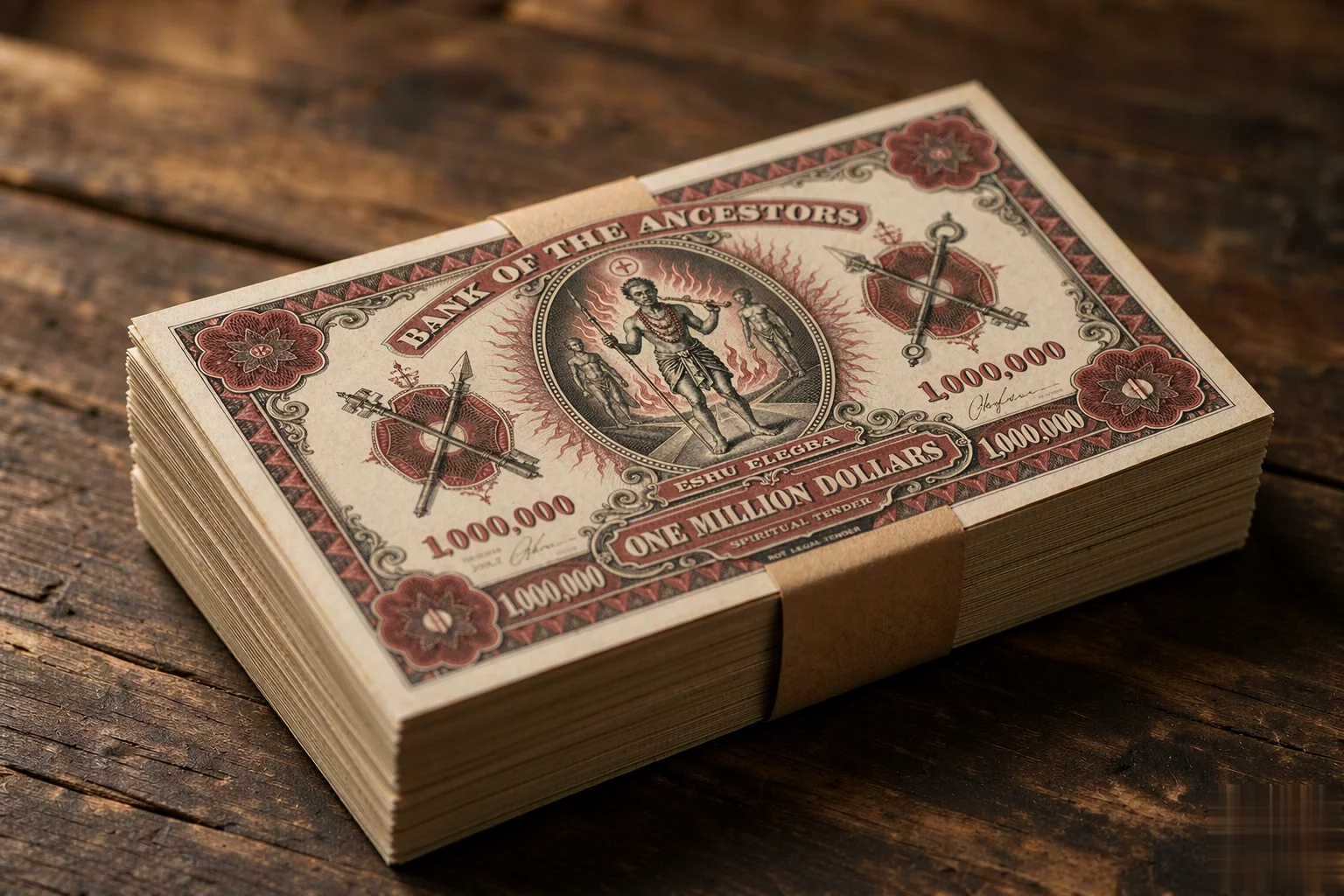
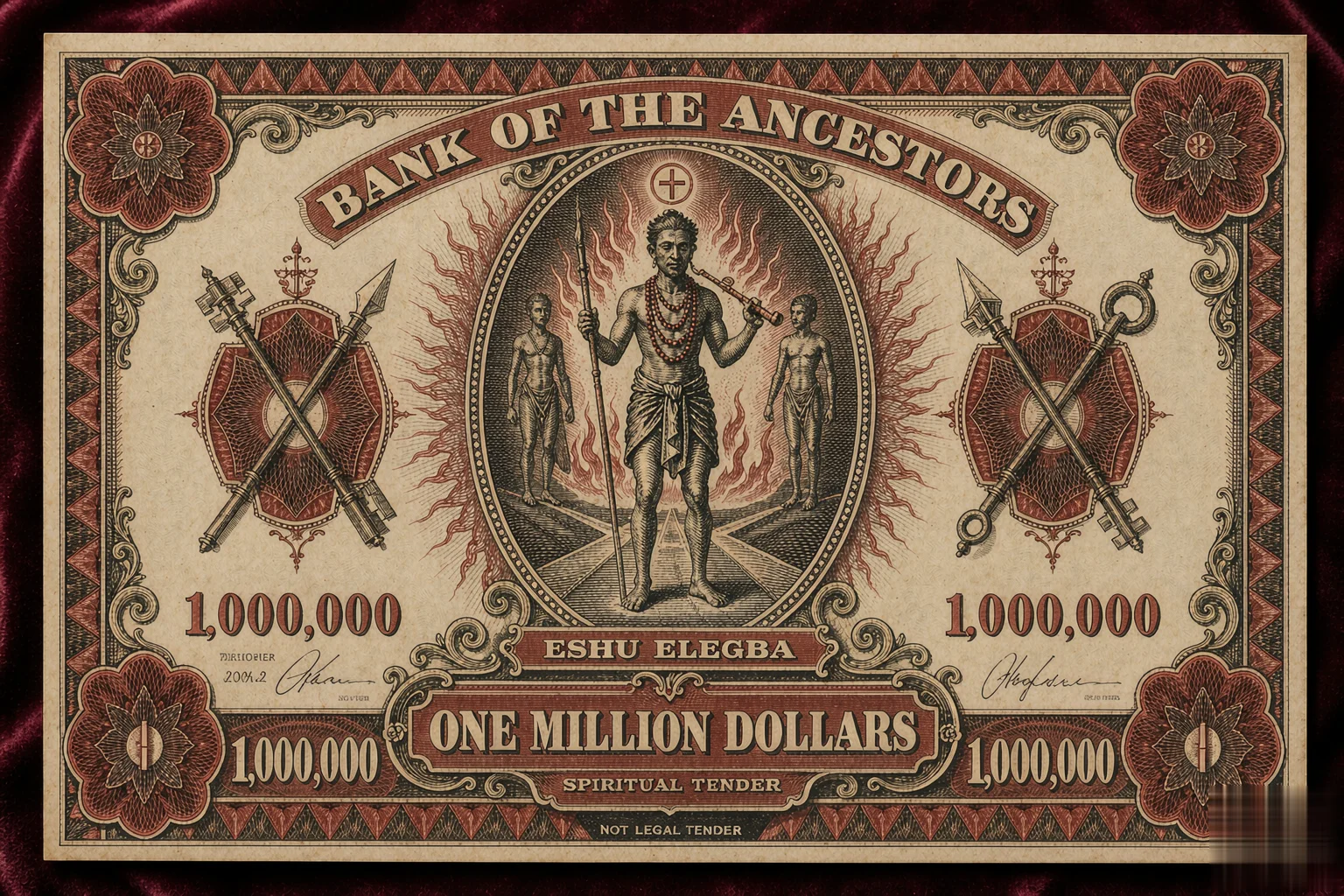
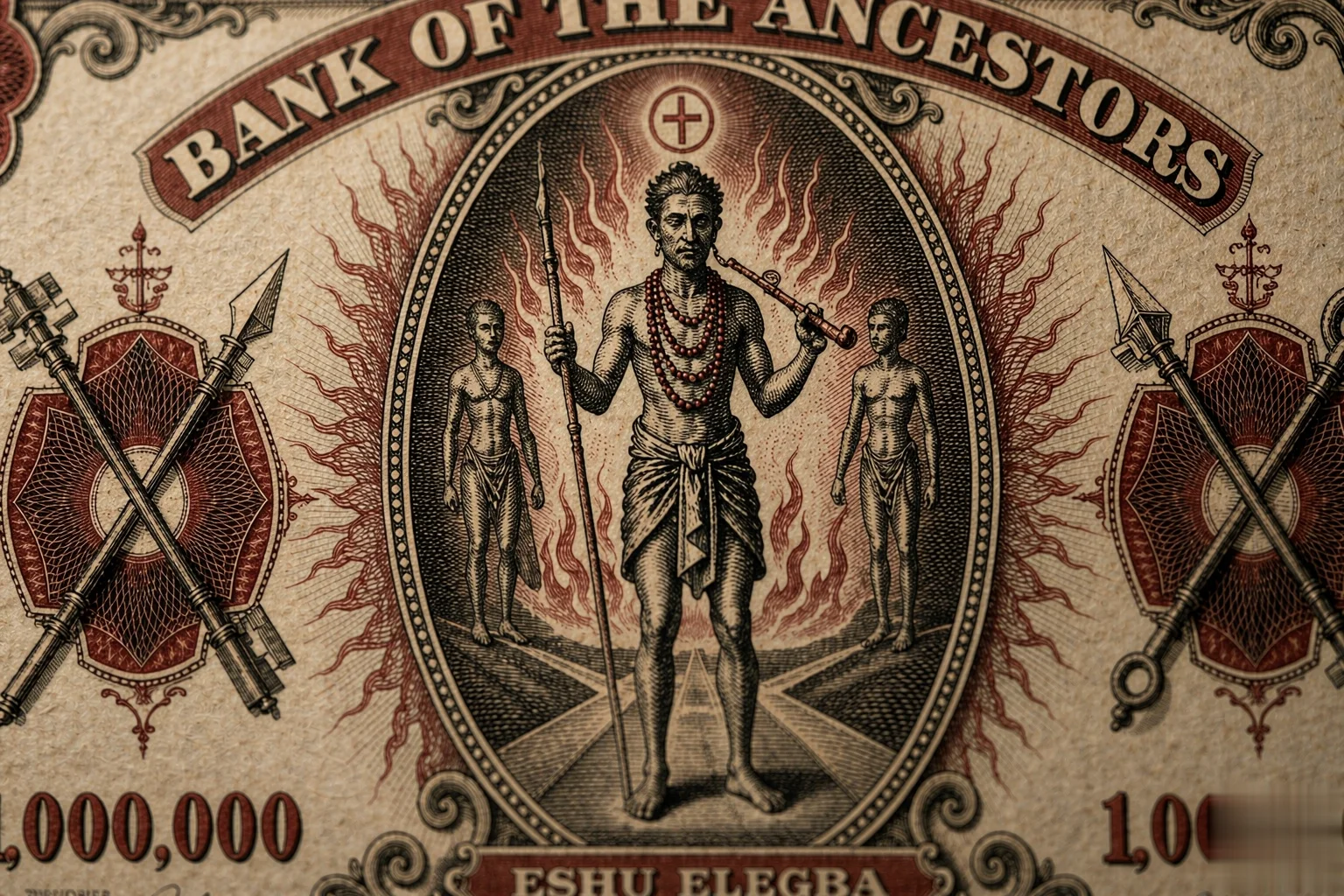
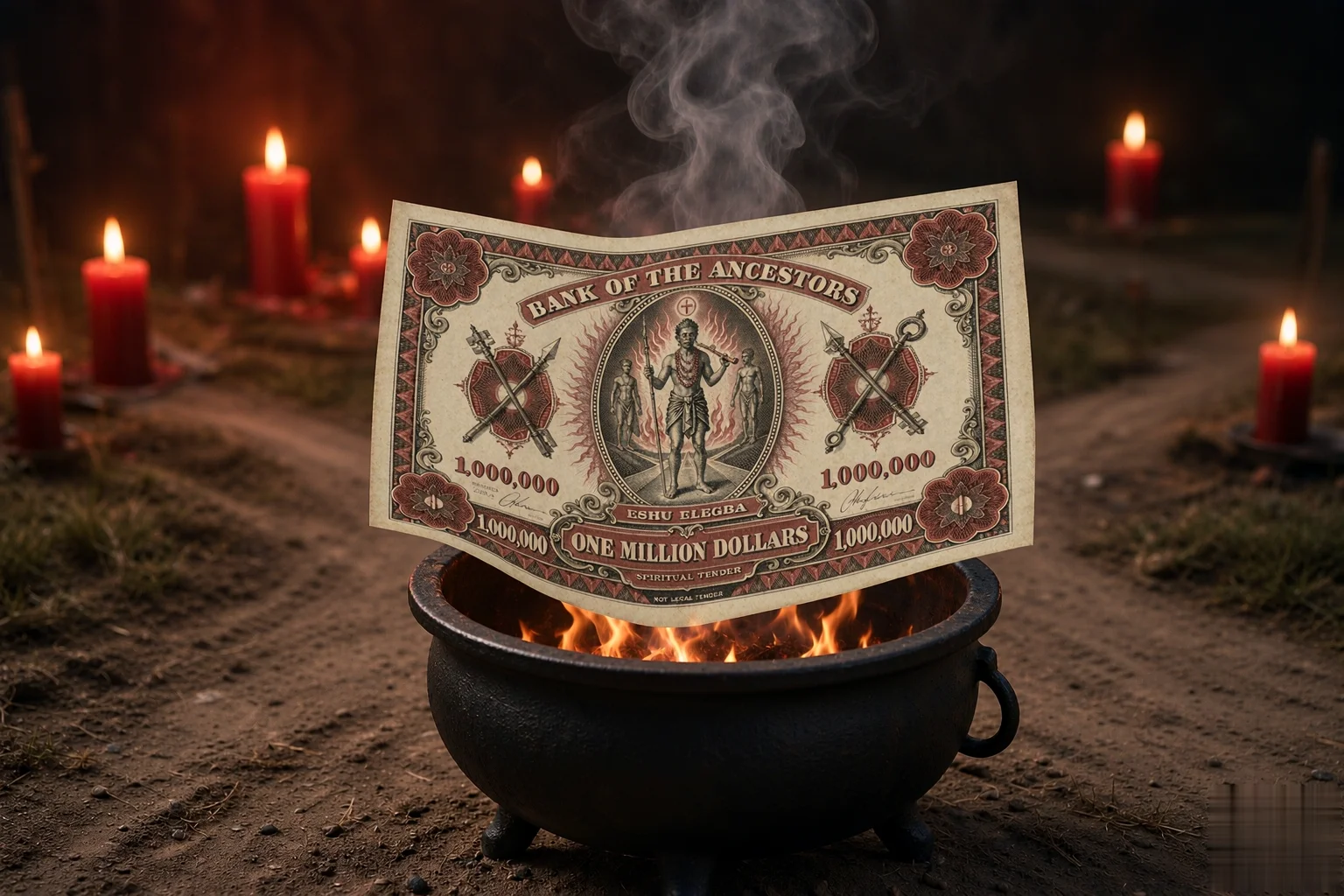
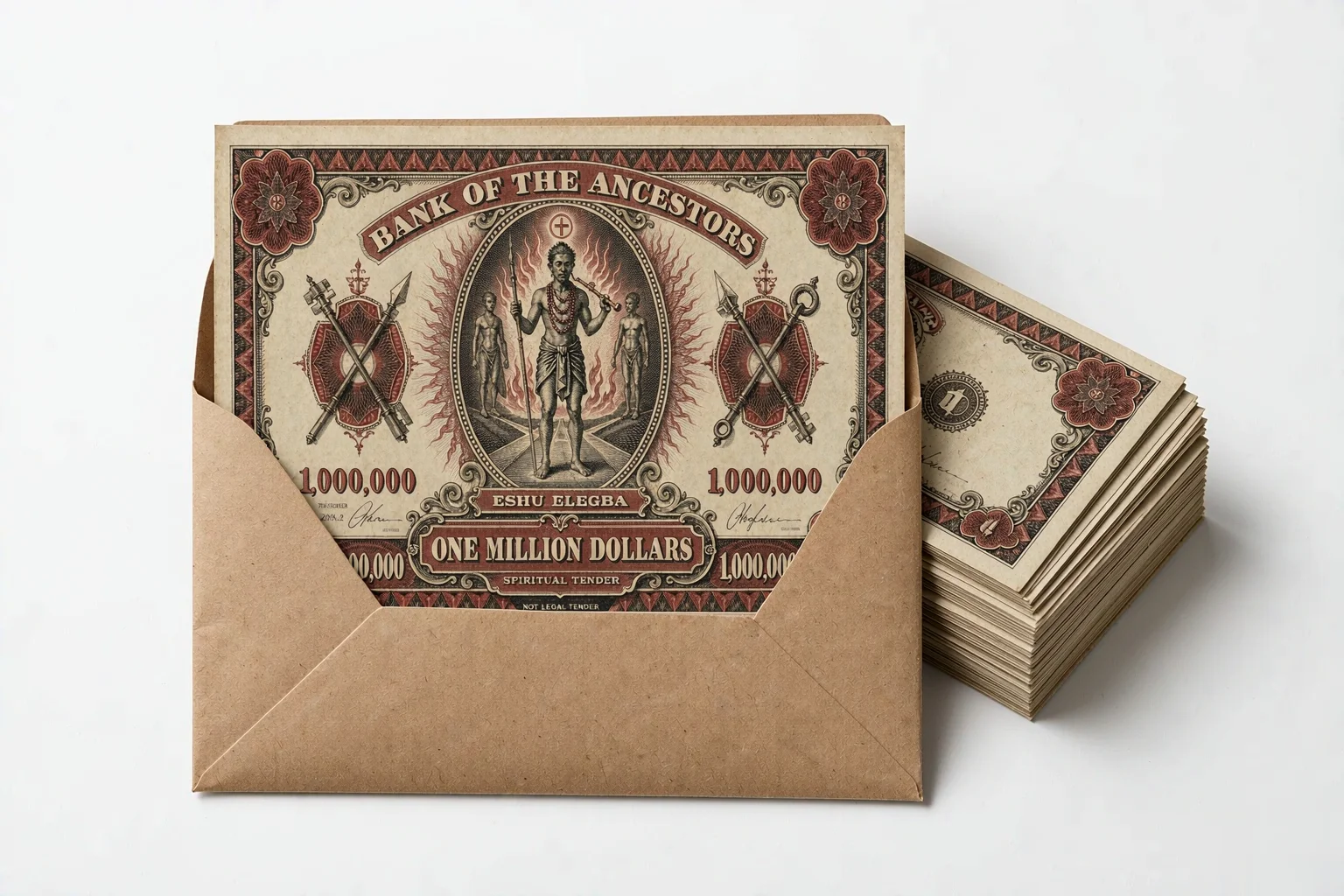
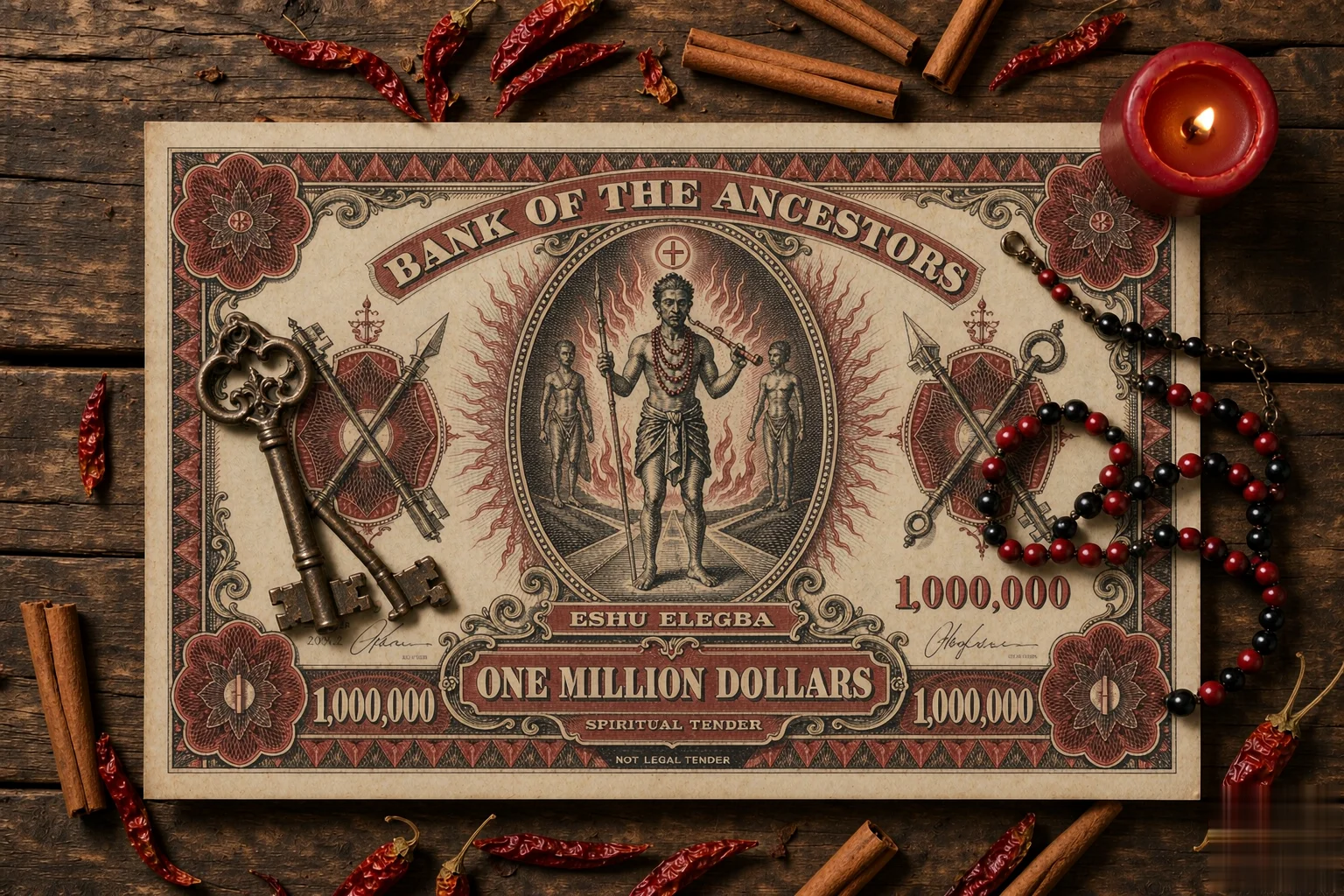
He is not the Brazilian Exu of Kimbanda. Different tradition, different figure, not interchangeable. On the note he stands bare-chested with a cloth at the waist, layers of red beads at his throat, a spear pointing up in his right hand, a crossroads opening at his feet, flames behind him. A cross-shaped mark sits above his head. Crossed spears and keys in shields to either side.
What Burning It Means
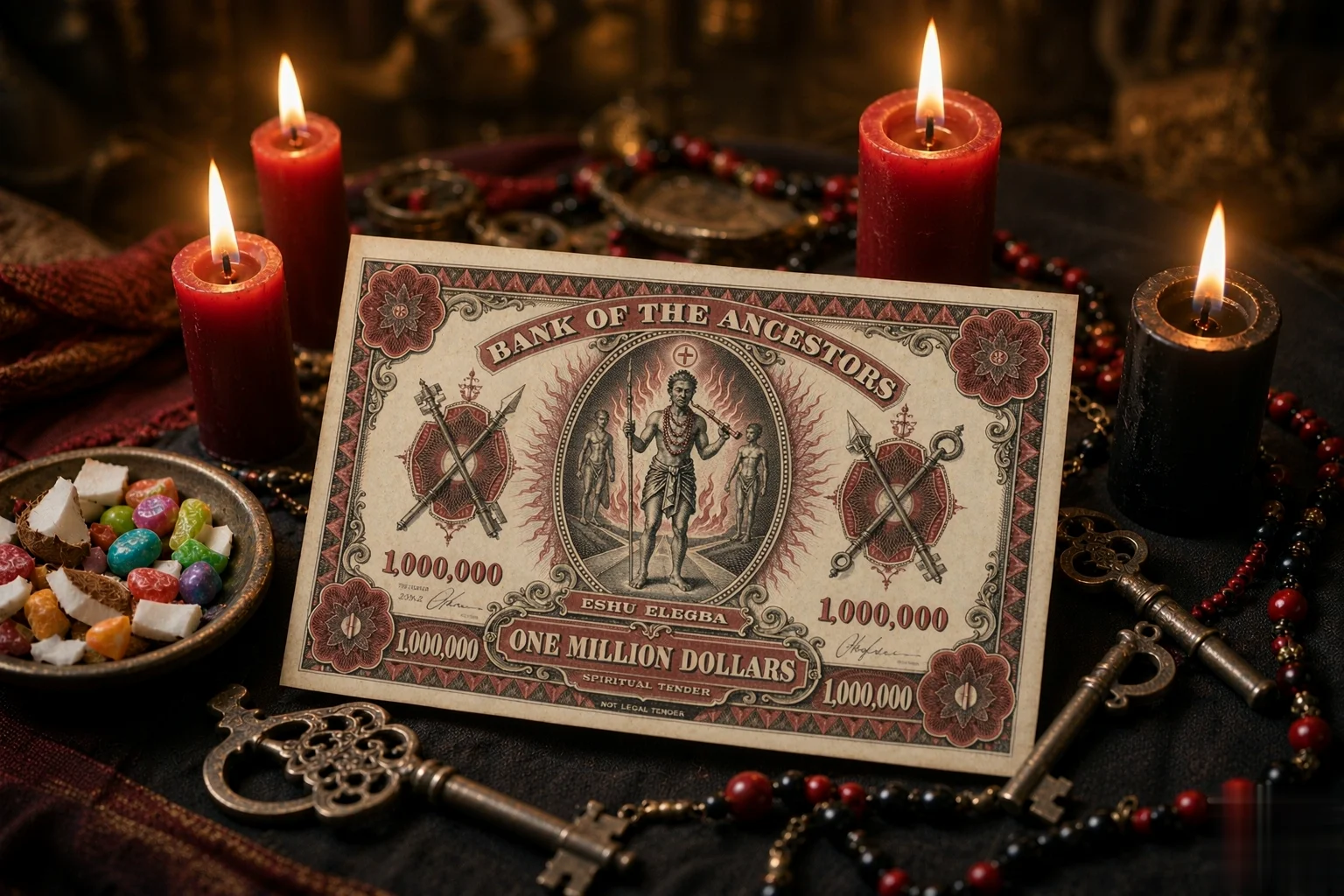
In the tradition, road opener work starts with his portion — a little of whatever you have, set down at the crossroads or the threshold. Burning is how the portion leaves your hands when you have no crossroads to walk to and no doorstep of your own. Smoke goes. The ash is yours to sweep. The request is out of the house. Or set it down where the road starts — a doorway, a gate hinge — and leave it.
What People Bring to Him
The interview that got no reply. A visa in a folder for eleven months. A file nobody will open. A family that has gone silent since spring. A shop with good windows, no foot traffic. The specific stuck thing, named out loud — that is the list this work is done on.
Write what is blocked on the back, and where it needs to go. Three is his count, so three notes make a set: three days, or three laid together at the start of a longer round of nine. The pack covers thirty-three of those rounds.
The Note Itself
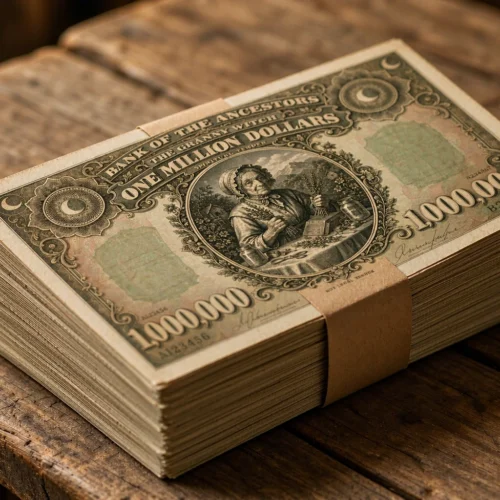
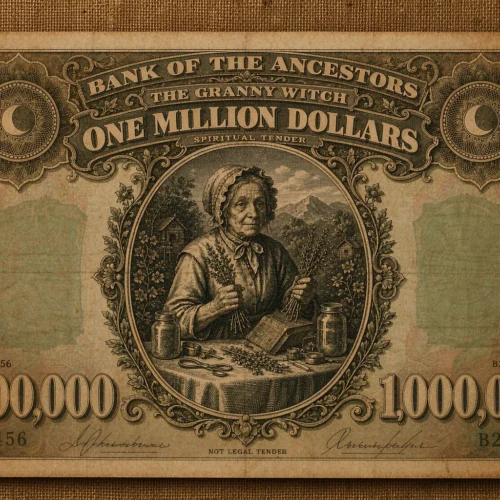
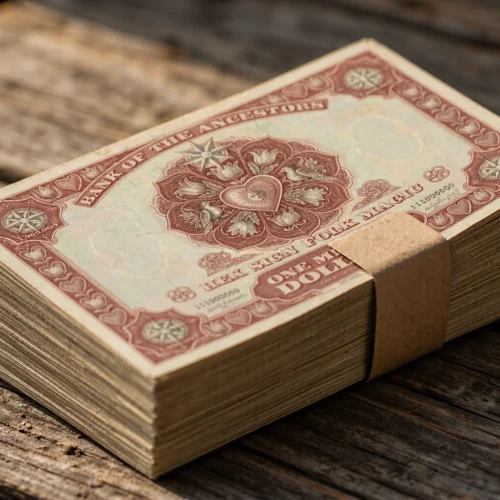
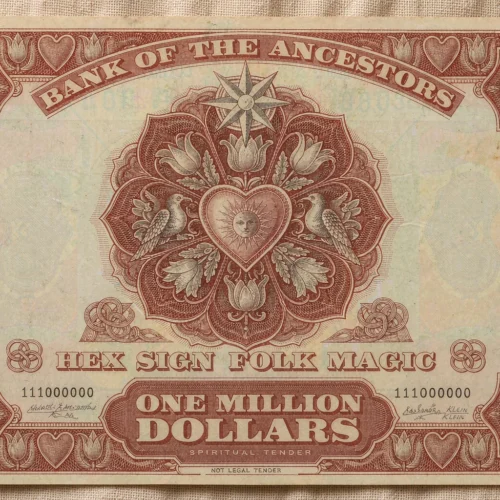
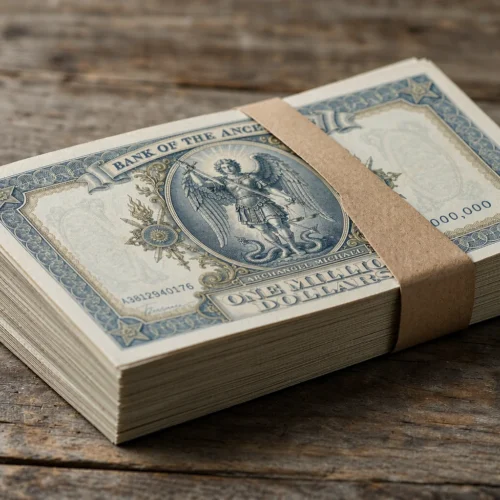
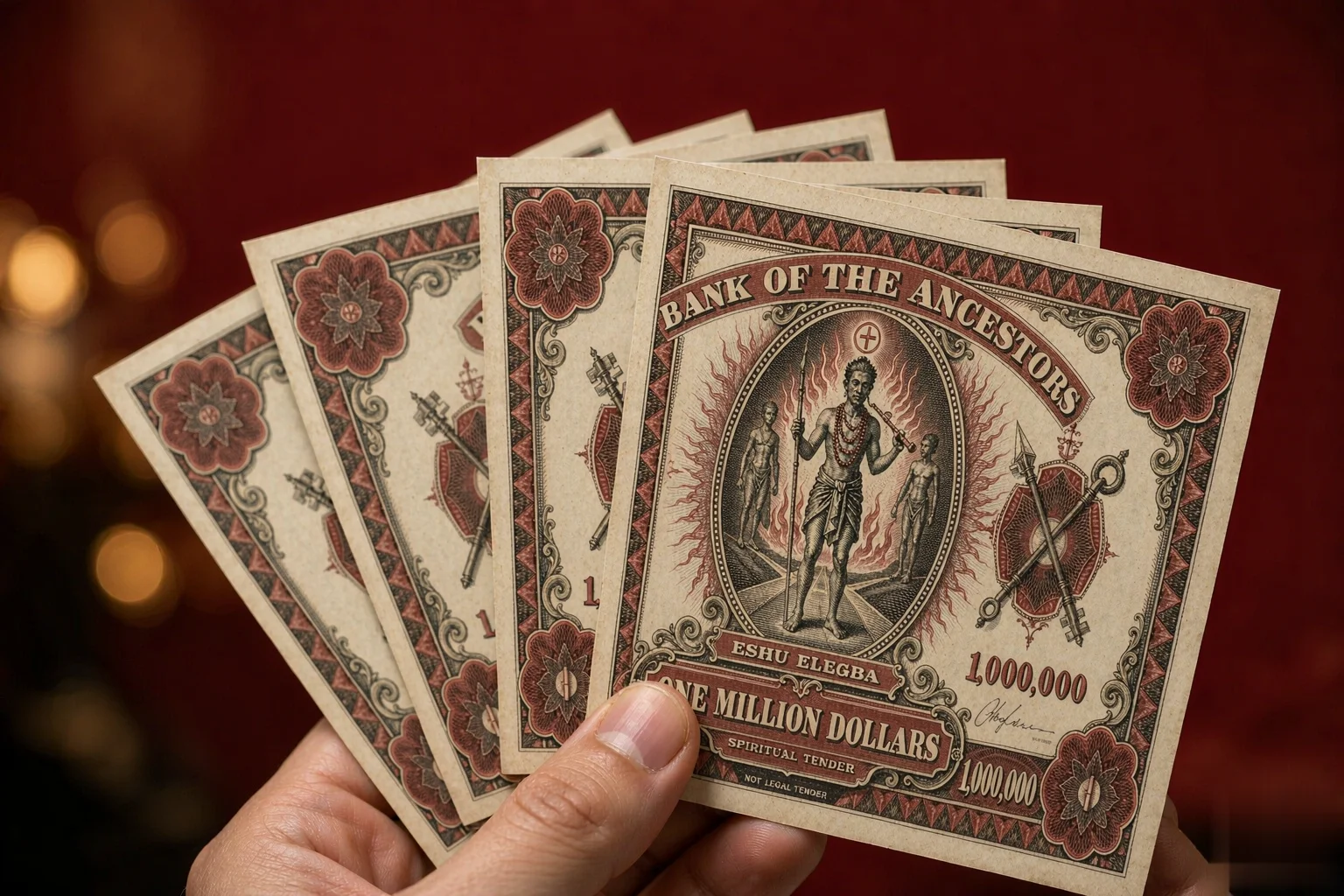
Brick red, deep brown, cream. 100 notes, printed both sides, 150 × 65 mm, aged antique finish, serial 2062, four-petal ornaments in the corners.
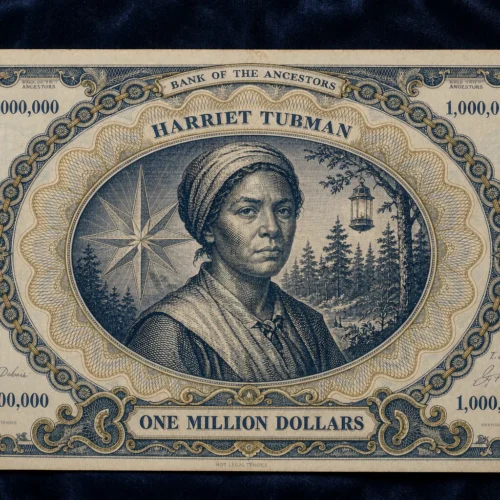
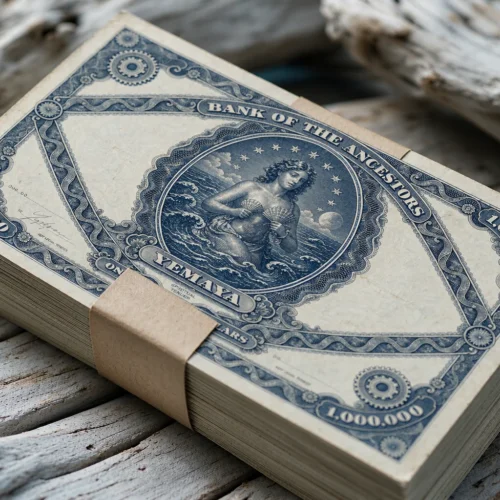
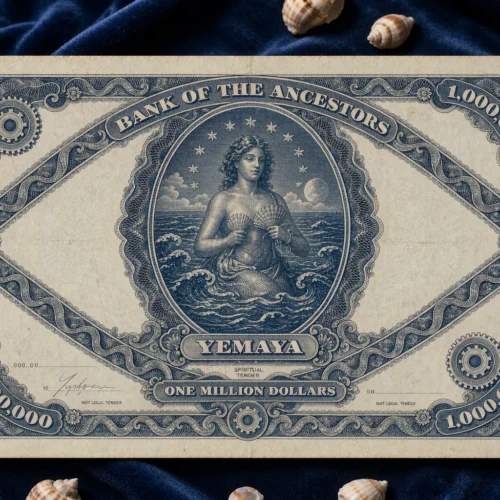
The surface is matte enough that writing does not skate — a ballpoint, a pencil, or an ink pen sit on it. Burned, it goes fast and leaves a small grey curl of ash. BANK OF THE ANCESTORS arcs over the top, SPIRITUAL TENDER across the lower middle, NOT LEGAL TENDER along the bottom. Damaged or wrong, we replace or refund and you ship nothing back.
A road does not open because a piece of paper burns. It opens because you finally said out loud where you are going, and then kept walking.
Sold as a cultural and folk-art curiosity. Printed paper, not currency. No spiritual, financial, or legal outcome is promised or guaranteed.
Others in the series: Yemaya offerings, and High John the Conqueror notes — the whole set.