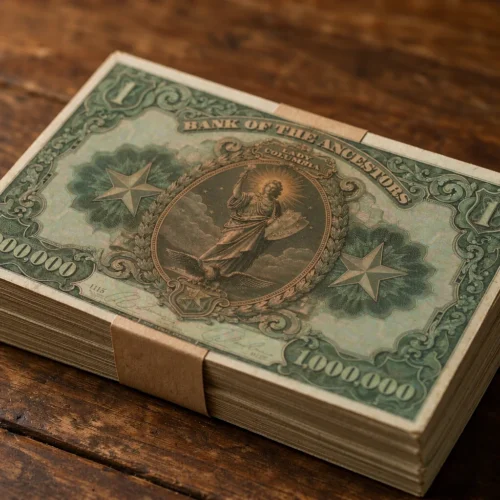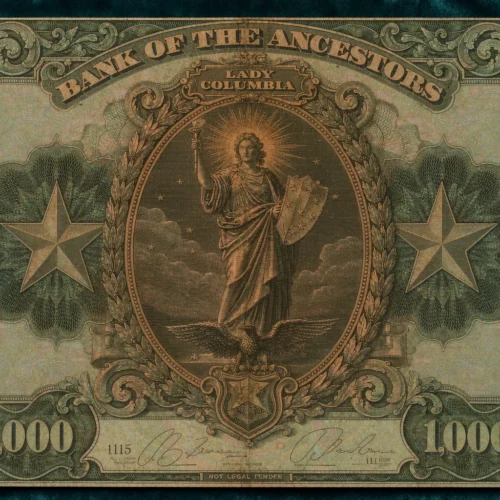



Description
She went first, and then she went back. That is the whole shape of her life, and it is why Mama Moses belongs on an altar beside your own people, not in a frame on a wall.
Who Harriet Tubman Is
Araminta Ross was born enslaved in Dorchester County, Maryland. She freed herself in 1849 and then returned, roughly thirteen times, bringing out about seventy people, her parents among them. People called her Moses, and later Mama Moses. The name that reached the wider world was Harriet Tubman. During the war she scouted and spied for the Union Army, and spent her last years in a house she owned in Auburn, New York.
In African American ancestor practice, Harriet Tubman is an ancestor among ancestors — the one who opened the road — placed at the altar beside the people whose names you carry.
What Burning It Means
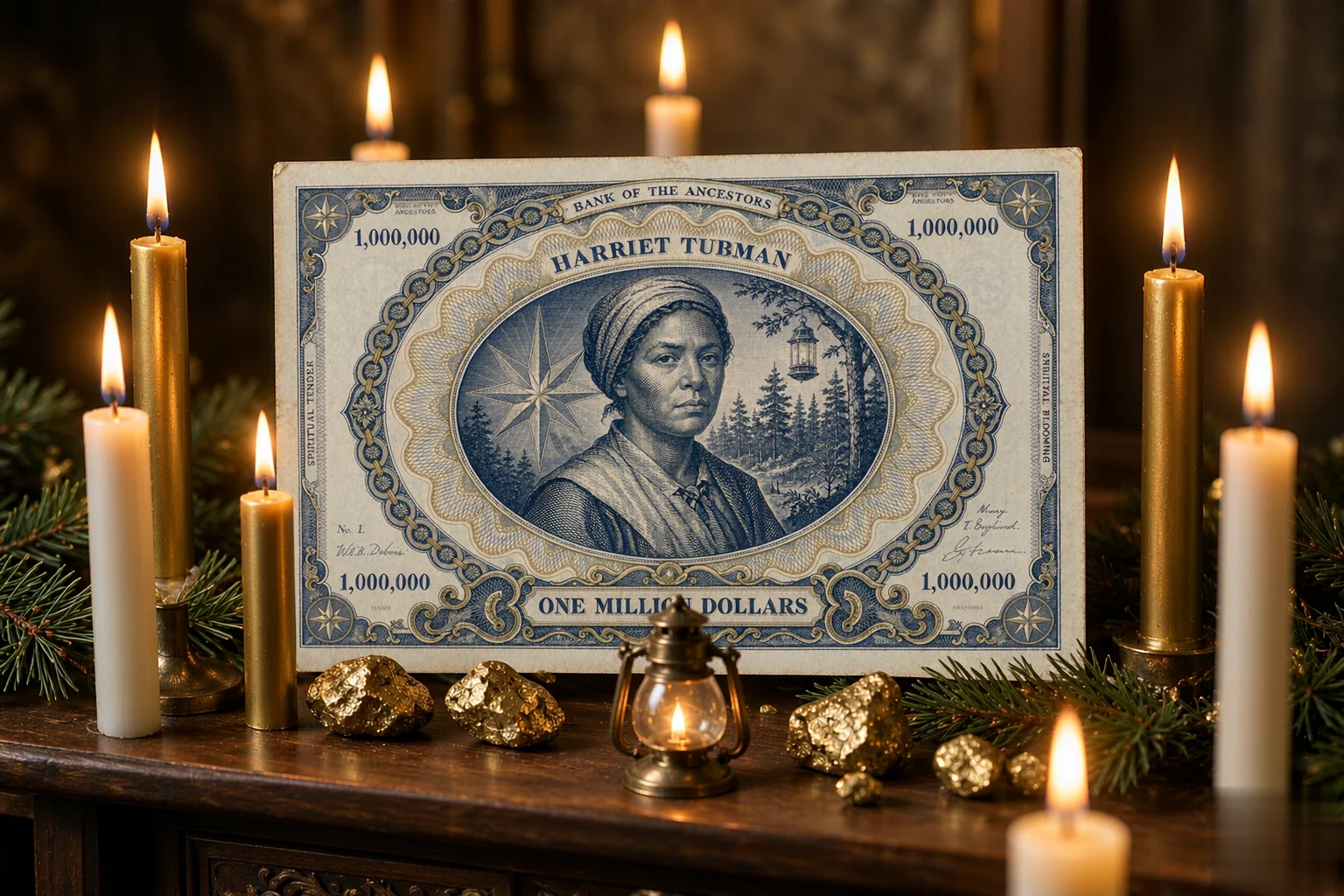
In this practice the altar is a table you keep set. You feed the ones who came before, you say their names, and you give them something instead of only asking. Fire is the doorway. Some people set it on the altar instead and let it sit there. Either way the name has been said. What is burned is understood to pass over, and what stays behind is ash and the smell of paper. That belief is old, and it is why nothing offered is ever wasted.
What People Bring to Her
A family trying to get out of a place where every road is priced too high. A child who needs to leave a neighborhood without losing themselves. A crossing you are about to make: a country, a marriage, a first year of college in a family where nobody went. A grandmother who cleaned other people’s houses so you could sit in a classroom, and whom you never thanked.
Write the names you carry on the back of the note. Say them out loud. Then get up and do the next necessary thing, because that is what Mama Moses did, thirteen times, in the dark.
The Note Itself
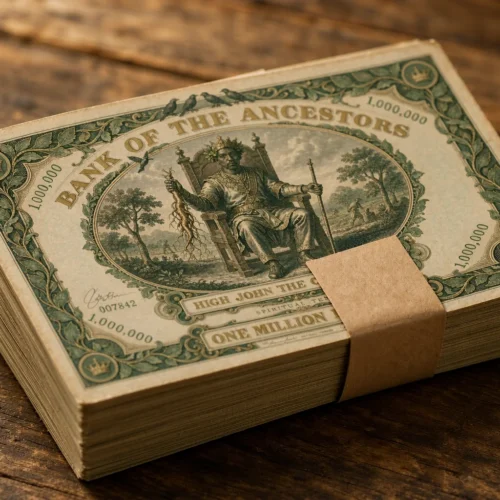
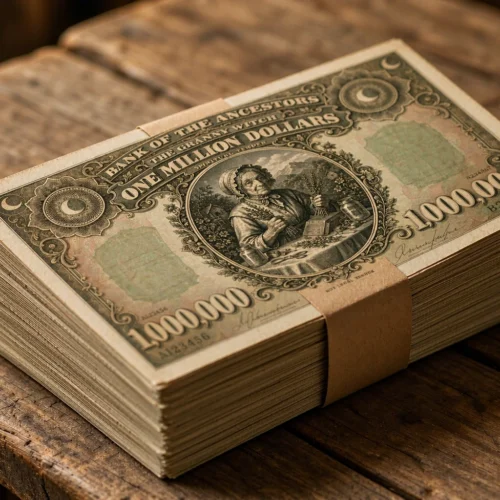
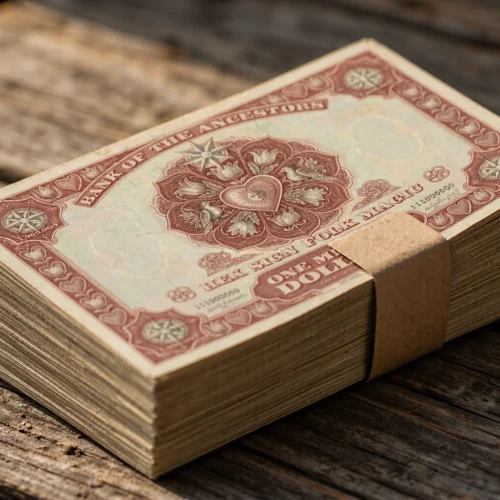
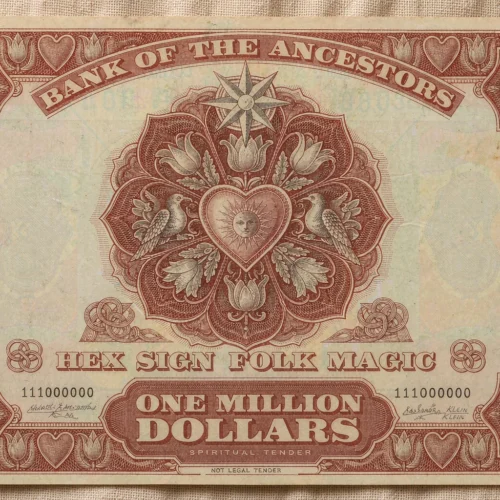
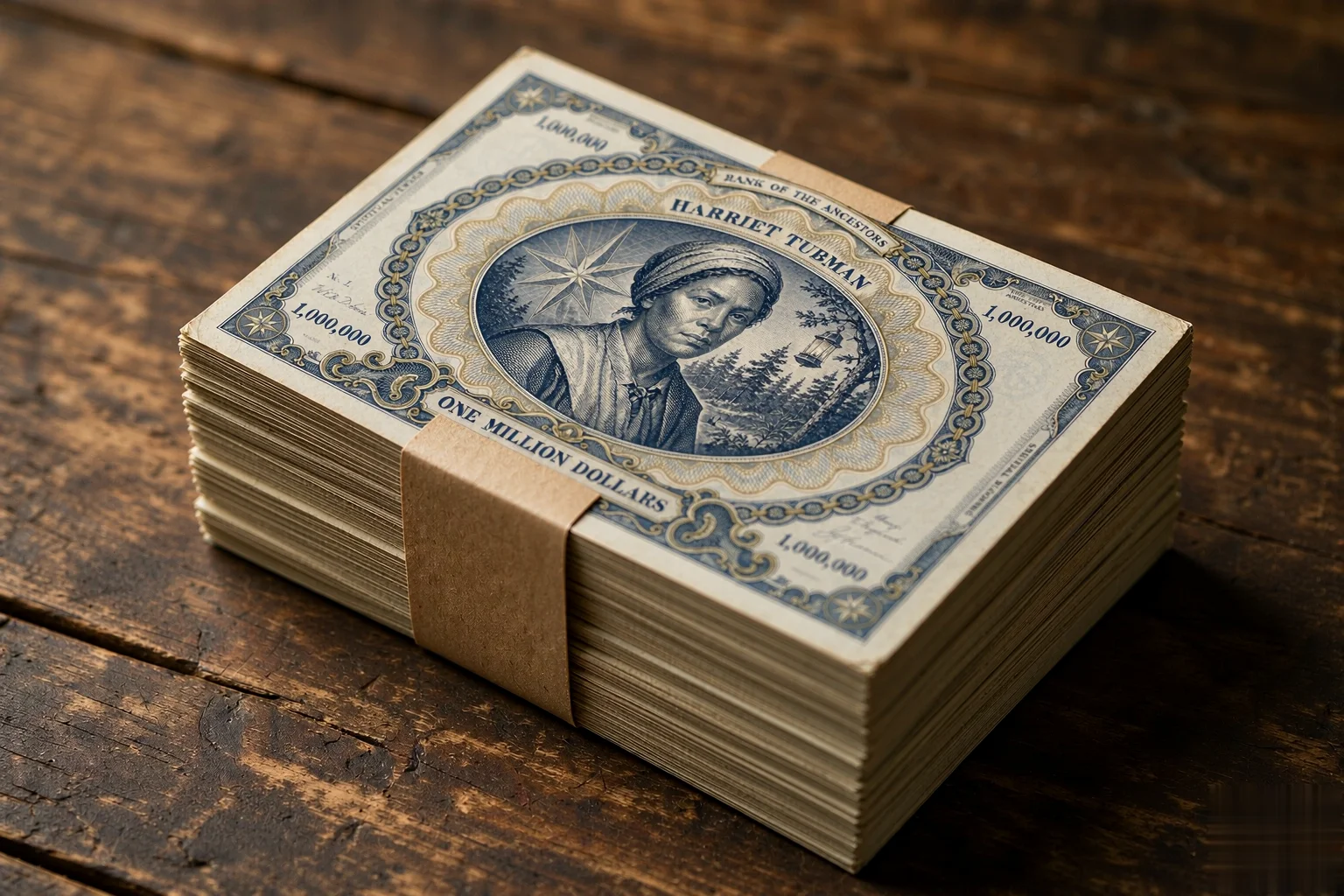
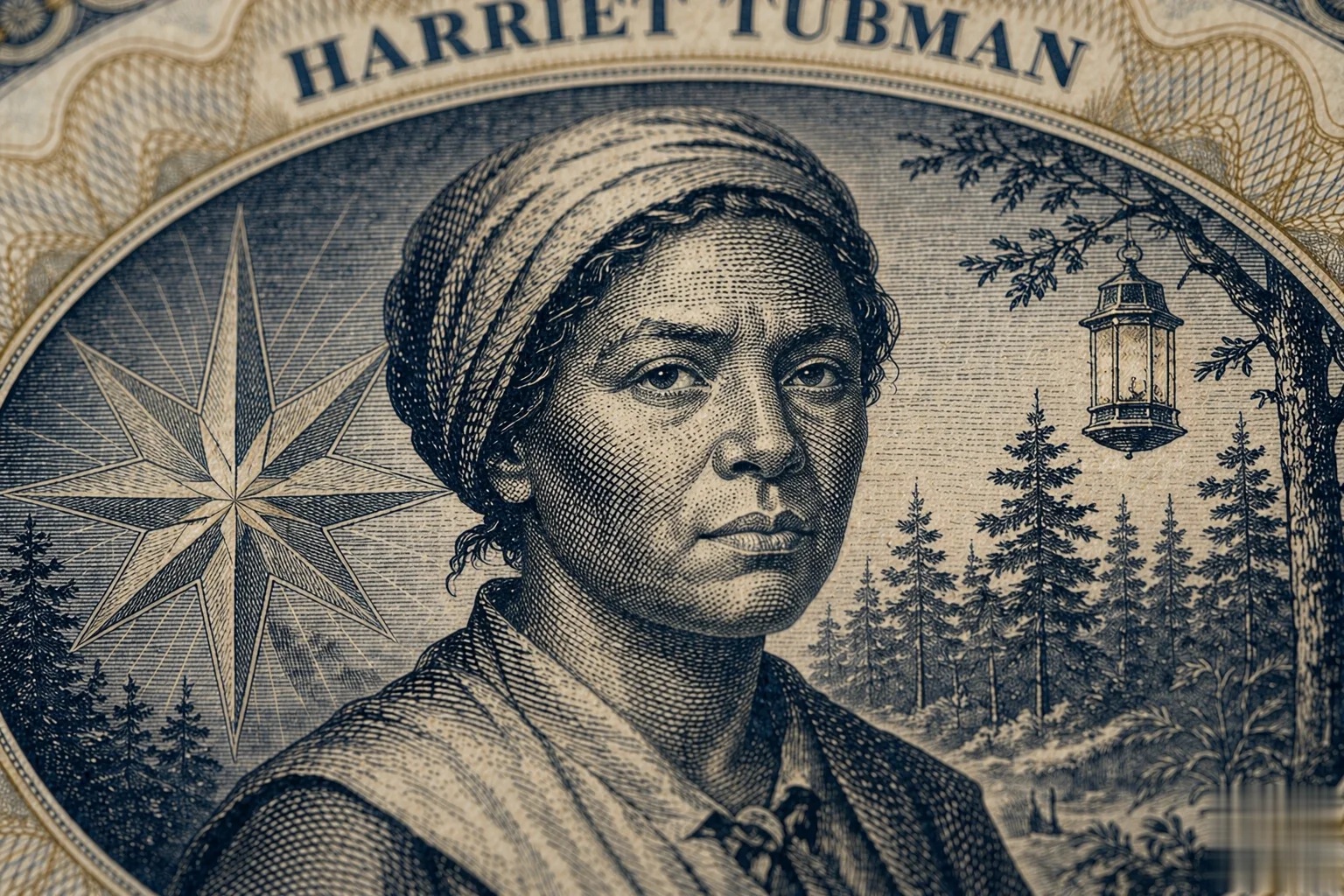
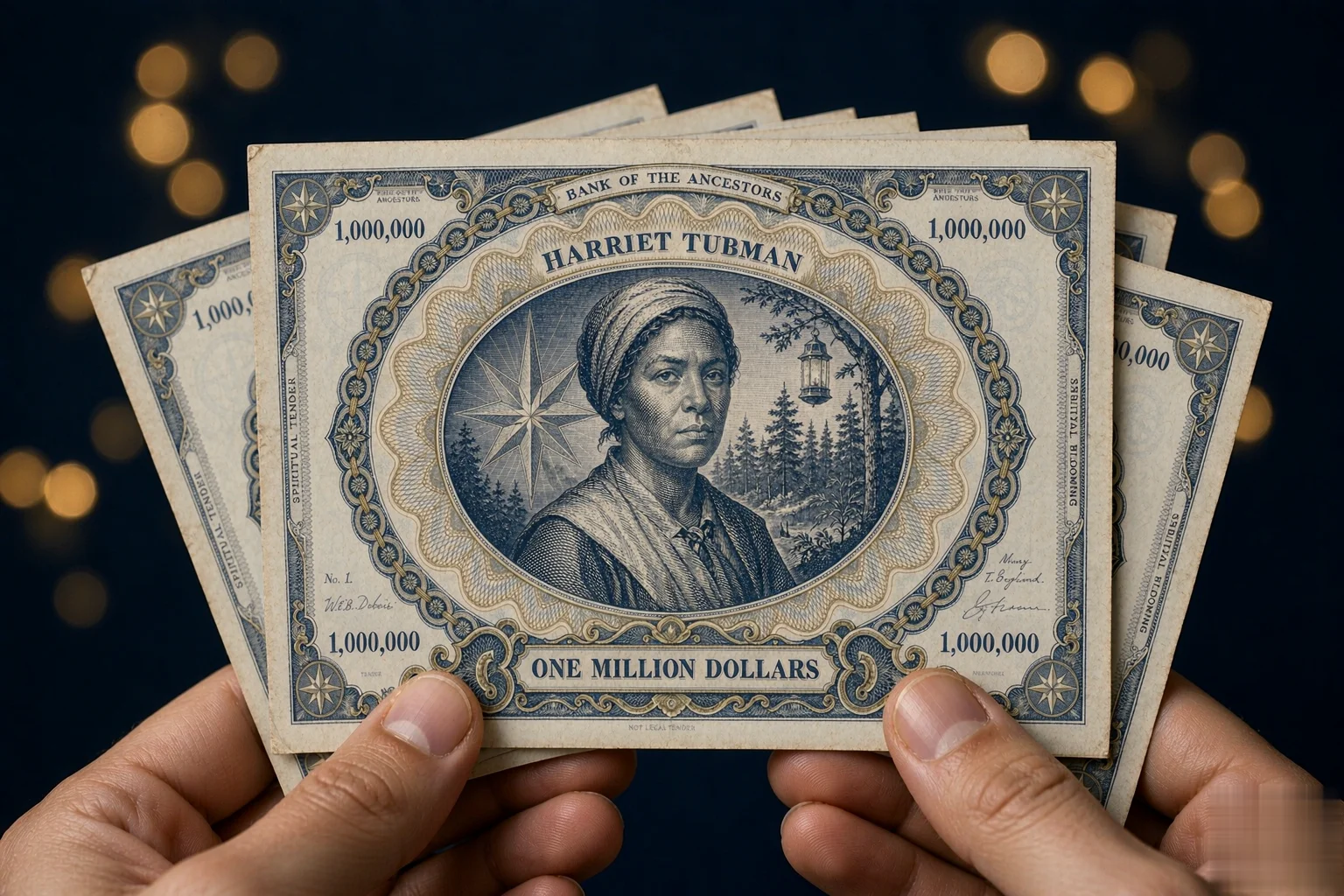
A long oval holds her half-length portrait: headwrap, shawl drawn close, eyes straight ahead. A great eight-pointed North Star radiates left. On the right a lantern hangs from a branch in front of pines. A woven chain-link border runs right around; compass roses sit in the corners, a handwritten signature mark at the lower right. Navy and cream, with BANK OF THE ANCESTORS above, SPIRITUAL TENDER and SPIRITUAL RECKONING vertical at the sides, NOT LEGAL TENDER along the bottom.
100 notes, printed both sides, 150 × 65 mm, aged antique finish. It takes a pen on the reverse and burns down completely. Damaged or wrong, we replace or refund and you ship nothing back.
The road she walked was not walked for her. The note is a way of saying her name at your table and meaning it.
Sold as a cultural and folk-art curiosity. Printed paper, not currency. No spiritual, financial, or legal outcome is promised or guaranteed.
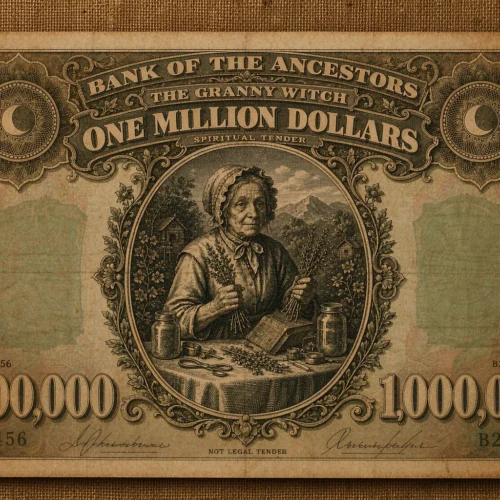
Others in the series: Marie Laveau offering money, and granny witch offering money — the whole set.