Your Chinese element by birth year comes from the nayin pair: find your birth year in the 60-year cycle, and the two years that share a pair share one element. 1984 and 1985 are both “gold in the sea.” 1996 and 1997 are both “water in the spring.” The element is fixed at birth, it is not your zodiac animal, and it is only the outermost layer of a full chart.
How do I find my element?
Five steps, one minute:
- Write down the year you were born, in the calendar you actually use. If that was January or the first week of February, stop here, read the boundary section lower down, and come back.
- Find your year in the table below. The cycle runs 60 years and repeats exactly: 1990 behaves like 1930, 2026 behaves like 1966.
- Read the nayin name for that pair of years. Every name is a small scene — gold in the sea, fire in the furnace, water of the heavenly river.
- Take the element from the name. Gold in the sea is Metal. Willow wood is Wood. The scene is flavor; the element is the answer.
- File it under year element. That is the honest scope of what you just looked up.
One detail you only notice if you handle the paper versions: every printed almanac — the rope-bound tongshu we restock each December — puts the year’s nayin at the top of the year page, right under the stem-branch characters. The 2026 page reads bing-wu, and directly beneath it, tian he shui: water of the heavenly river. The table below is the same information the almanac prints, laid out flat for 60 years at a time.
Is the element based on the year or the day?
Both, in different systems, and this is where most of the online disagreement comes from. The year element — the one in the table — comes from the stem-branch pair of your birth year. A full four-pillar reading instead weights the day pillar: the element of the day stem is called the day master, and that is the element a serious reading builds on. The day pillar changes daily, which is why a proper chart needs the exact date and hour, not just the year.
There is also a third shortcut going around: take the last digit of your birth year — 0 and 1 are Metal, 2 and 3 are Water, 4 and 5 are Wood, 6 and 7 are Fire, 8 and 9 are Earth. That reads the year stem alone. It will disagree with the nayin roughly half the time: 1984 comes out Wood by the stem and gold in the sea by nayin. Both answers appear in the same almanac. Folk usage leans nayin for year questions and stems for quick color talk, and we have watched two practitioners in the same market street settle it differently. We state both rather than pretend one is wrong.
The full 60-year table
The cycle printed below covers 1924 through 1983. Add 60 to any year for the next cycle.
| Birth years | Nayin name | Element |
|---|---|---|
| 1924–1925 | Gold in the sea | Metal |
| 1926–1927 | Fire in the furnace | Fire |
| 1928–1929 | Wood of the great forest | Wood |
| 1930–1931 | Earth by the roadside | Earth |
| 1932–1933 | Metal of the sword edge | Metal |
| 1934–1935 | Fire on the mountaintop | Fire |
| 1936–1937 | Water beneath the stream | Water |
| 1938–1939 | Earth on the city wall | Earth |
| 1940–1941 | Metal in white wax | Metal |
| 1942–1943 | Willow wood | Wood |
| 1944–1945 | Water in the spring | Water |
| 1946–1947 | Earth on the roof | Earth |
| 1948–1949 | Thunderbolt fire | Fire |
| 1950–1951 | Pine and cypress wood | Wood |
| 1952–1953 | Long-flowing water | Water |
| 1954–1955 | Metal in the sand | Metal |
| 1956–1957 | Fire below the mountain | Fire |
| 1958–1959 | Wood of the plain | Wood |
| 1960–1961 | Earth on the wall | Earth |
| 1962–1963 | Gold-foil metal | Metal |
| 1964–1965 | Fire of the covered lamp | Fire |
| 1966–1967 | Water of the heavenly river | Water |
| 1968–1969 | Earth of the great post road | Earth |
| 1970–1971 | Hairpin and bracelet metal | Metal |
| 1972–1973 | Mulberry wood | Wood |
| 1974–1975 | Water of the great stream | Water |
| 1976–1977 | Earth in the sand | Earth |
| 1978–1979 | Fire in the sky | Fire |
| 1980–1981 | Pomegranate wood | Wood |
| 1982–1983 | Water of the great sea | Water |
So, read forward: 1984 and 1985 are gold in the sea again, 1996 and 1997 are water in the spring, 2008 and 2009 are thunderbolt fire, 2020 and 2021 are earth on the wall, 2024 and 2025 are fire of the covered lamp. Born before 1924? Subtract 60 and the table still holds. The pairings have been printed the same way for centuries.
Does the element change every year?
Yours does not. It is fixed by the year you were born and no anniversary moves it. What changes is the calendar’s element, and here is the part that trips up even people who own the almanac: the systems name different elements for the same year. 2026 is a bing-wu year. Stem: Fire. Branch: the horse, Fire in most quick charts. Nayin: water of the heavenly river. Three readings of one year, printed within a centimeter of each other on the same page. When a family asks us which to use for choosing a paper color, we say nayin for the year-layer question and stem for anything tied to the current month — and then admit that the old hands we buy from answer by habit, not by rule.
The two mistakes everyone makes
January and early-February birthdays. Two boundaries are in play and they do not coincide. The folk zodiac turns over at lunar new year, which lands anywhere from January 21 to February 20 depending on the year. The year pillar used in four-pillar readings turns over at lichun, the solar term that falls February 3 to 5, no matter where new year lands that year. Born January 25, 1985: before lunar new year (February 20 that year) and before lichun (February 4), so both systems still call you 1984 — Wood by the stem chart, gold in the sea by nayin. Born February 10, 1985: past lichun already, so your year pillar is 1985 even though the lunar new year had not arrived. One birthday, one system ahead of the other. That is not an error anywhere; it is two clocks. We flag it because January birthdays are the single most common correction we make when someone sends us their details before ordering a burn.
Assuming the animal decides the element. Five rat years, five different nayin elements: 1984 gold in the sea, 1996 water in the spring, 2008 thunderbolt fire, 2020 earth on the wall, 2032 mulberry wood. Same animal, none of the same element. The animal is the branch alone; the element rides the pair, and the pair is what the table reads.
What the element is actually used for
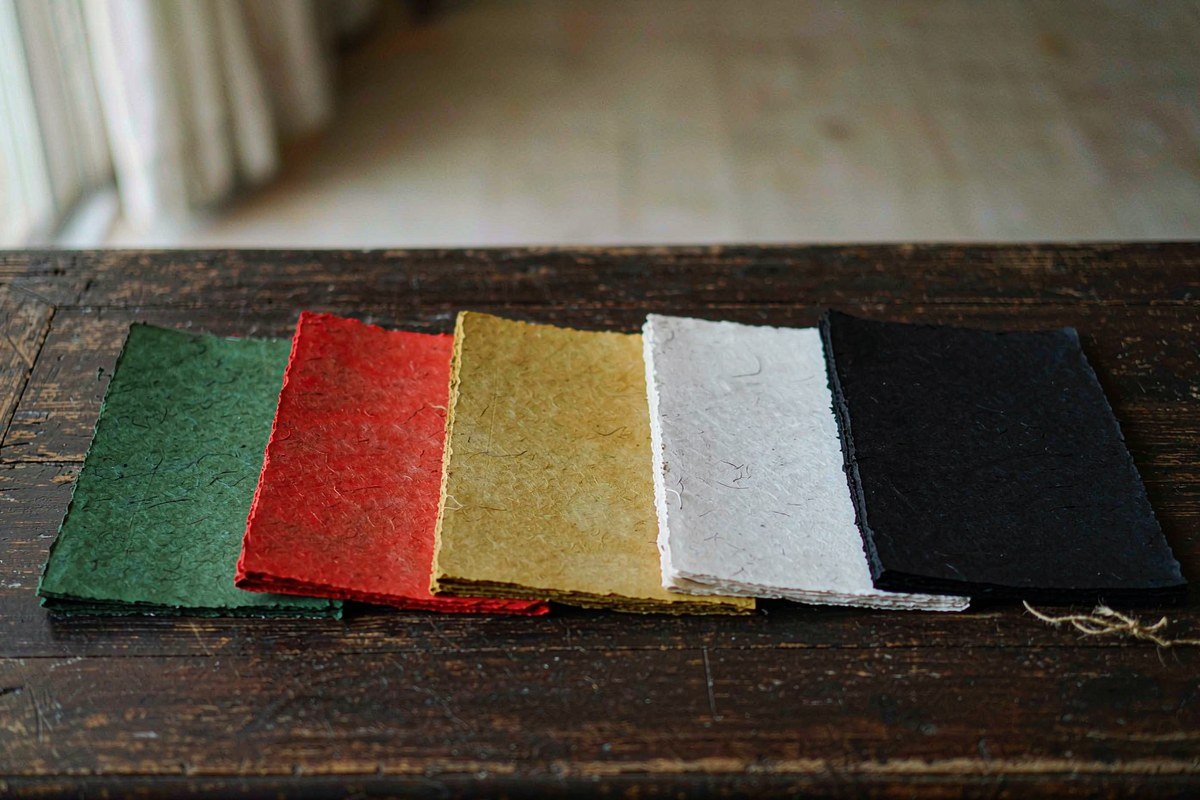
Less than the internet promises, more than nothing. In the families we pack for, the year element shows up in three places. Colors: green for Wood, red for Fire, yellow and ochre for Earth, white and gold for Metal, black and blue for Water — chosen when a family picks paper or clothing for a memorial occasion. Matching: an elder compares the year’s element against a person’s element when a date is being chosen for a visit to the grave. And the old habit of keeping one’s element as a small object rather than a thought. For that last one, if you want the element painted instead of remembered, we sell a hand-painted five elements talisman, ink on yellow paper.
Where this connects to the paper side: the color logic above is the same logic that separates gold-foil sheets from plain white ones. If you arrived here from the paper end and want the ground floor first, start with what ancestor money actually is, then come back to the table.
Common questions
What is my element if I was born in January?
Check two dates before trusting any chart: lunar new year and lichun (February 3–5). Before lunar new year, the folk zodiac puts you in the previous animal year; before lichun, the four-pillar year pillar does the same. Most January birthdays fall in the previous year under both systems, but the exact cutover moves every year, so look up the specific year instead of assuming.
Why do websites give me different elements for the same year?
Because two systems are being mixed: the last-digit stem shortcut and the nayin pair. 1984 is Wood by stem and gold in the sea by nayin. Both are printed in the almanac. Neither is a typo.
Does the day or hour of birth change this element?
No. The year nayin is fixed by the birth year alone. Day and hour matter for the day master in a full four-pillar chart, which is a different calculation and needs the exact date and time.
Is my element the same as my zodiac animal’s element?
Not reliably. Each animal recurs with five different nayin elements across the 60-year cycle — five rat years, five elements. The animal narrows it to one of five; the table picks the one.
Once the element is settled, the next question is usually the calendar rather than the chart: what gets burned, how much, and on which days. We keep that by occasion in how much ancestor money to burn.