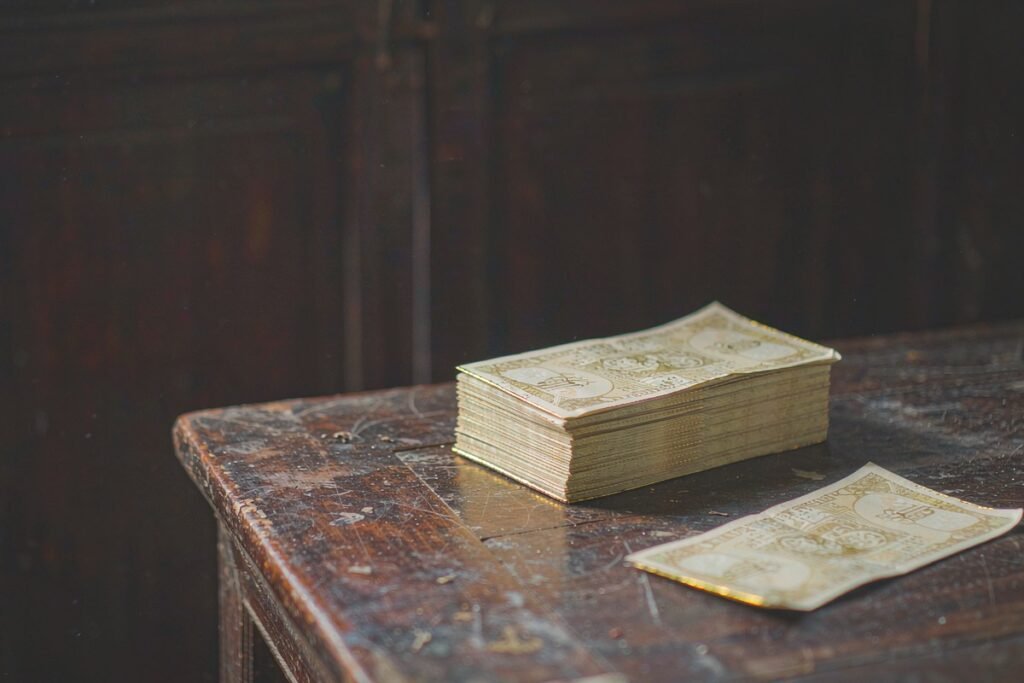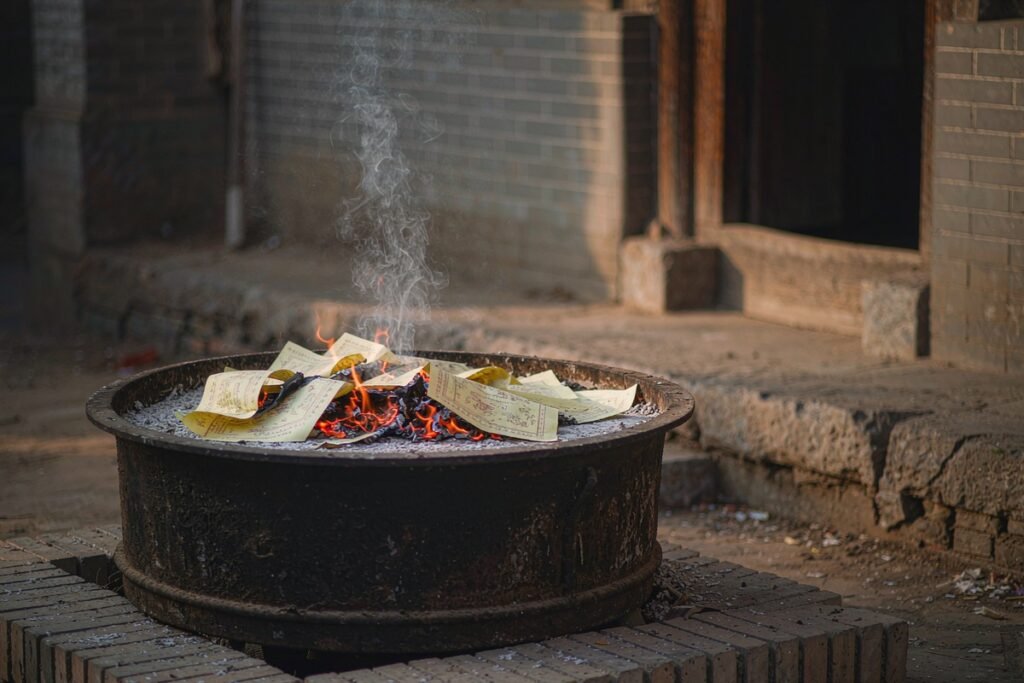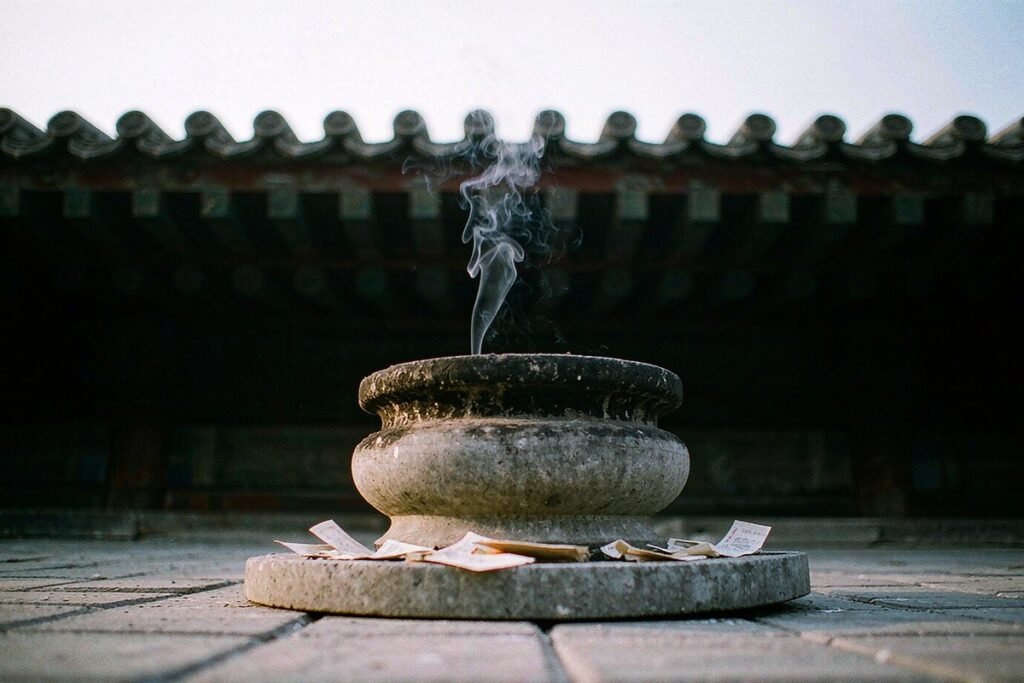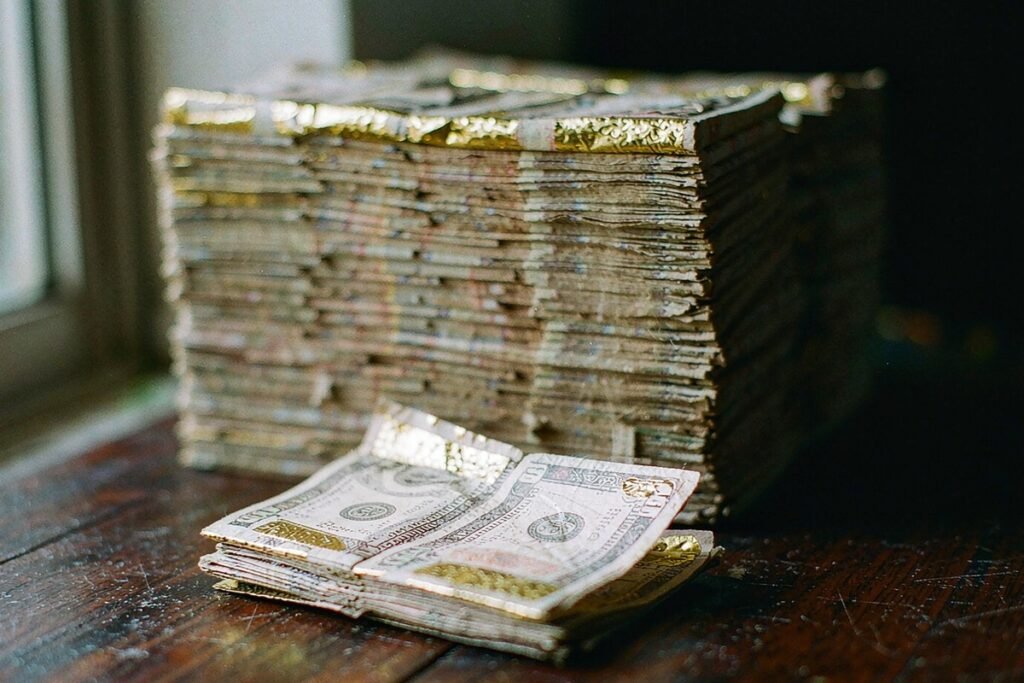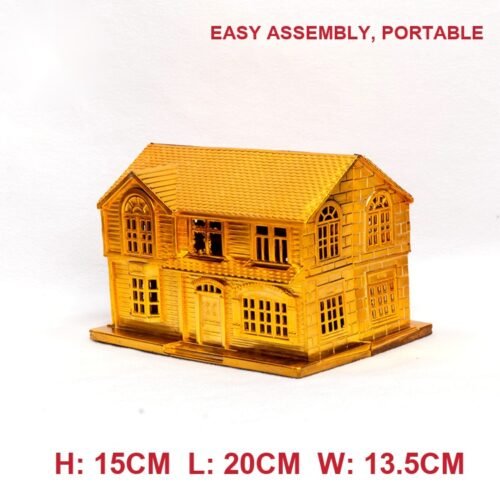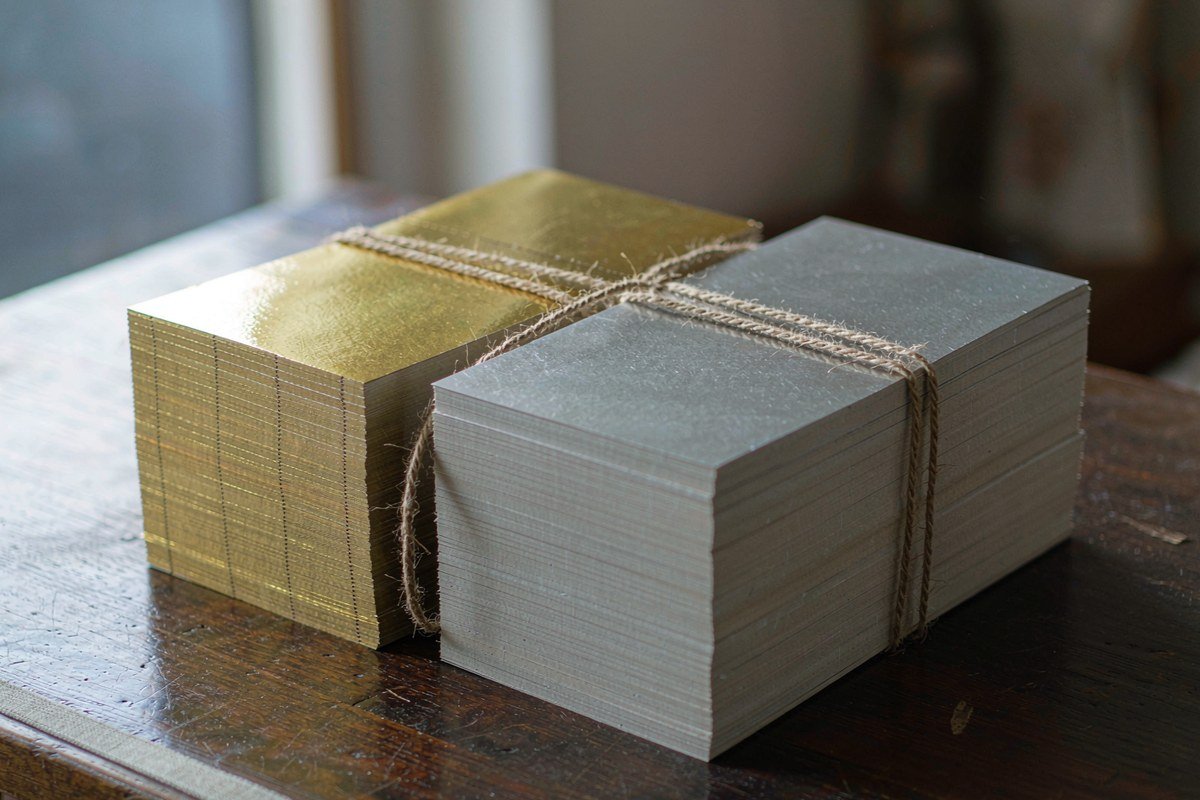
Gold joss paper goes up — deities, the City God, Heaven — and silver goes down — ancestors, the recently dead, the restless. One sheet of paper, two addresses, and the foil is the stamp. Mixing the two in one fire is a breach of etiquette, not a catastrophe: nobody gets punished for burning the wrong grade. You just re-sort the pile and start the fire again.
What is the difference between gold and silver joss paper?
Everything that matters fits in one table:
| Gold paper | Silver paper | |
|---|---|---|
| Address | Up: deities, Heaven, the City God | Down: ancestors, the recently dead, wandering spirits |
| Surface | Gold foil patch or full foil sheet | Matte silver-tone paper, foil on some grades |
| Typical occasion | Temple days, deity birthdays, the ninth day of the first lunar month | Qingming, Ghost Festival, anniversaries of a death |
| Wrong-way risk | Burning it for the dead reads as sending divine mail to the wrong box | Burning it for a deity reads as paying the gods in small change |
| Recovery | Sort the pile, burn separately. That is the whole penalty. | |
Two routes, and the tradition never pretended there was only one. The oldest written record of both directions predates paper money entirely:
《礼记·祭法》 · Liji (Book of Rites), “Ji Fa” (Treatise on Sacrifice), compiled c. 1st century BCE
燔柴于泰坛,祭天也;瘦埋于泰折,祭地也。
Burn firewood on the great altar: that is the sacrifice to Heaven. Bury offerings at the great terrace: that is the sacrifice to Earth.
Fire up, burial down — the two directions were already in place a thousand years before anyone printed a sheet of paper money. Gold-up and silver-down is not folklore layered on top of something older; it is the paper era’s continuation of the same two addresses. When you sort the stacks on the table, you are doing what the sacrifice officers sorted: traffic going up, and traffic going down.
Which paper money do you burn for ancestors?
Silver, and the size grade carries the message. The Taiwanese trade splits silver into two sheets most buyers actually meet: da yin (large silver), the ancestor sheet, foil patch wide enough to cover a good third of the paper; and xiao yin (small silver), a narrow foil strip on plain grey paper, the sheet for base spirits and strays rather than family. Some counties swap the jobs of the two; we have bought both orders, and the shop assistant’s answer to “which for grandfather” changes at the county line. Plain white rice-paper without any foil still circulates for the oldest, simplest burns.
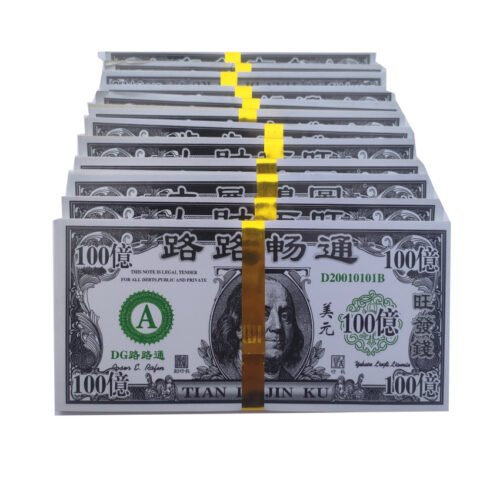
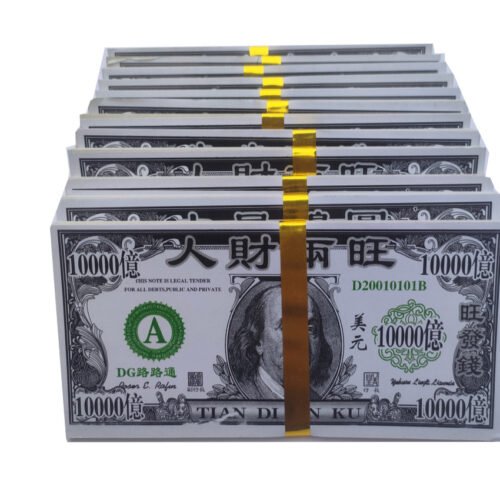
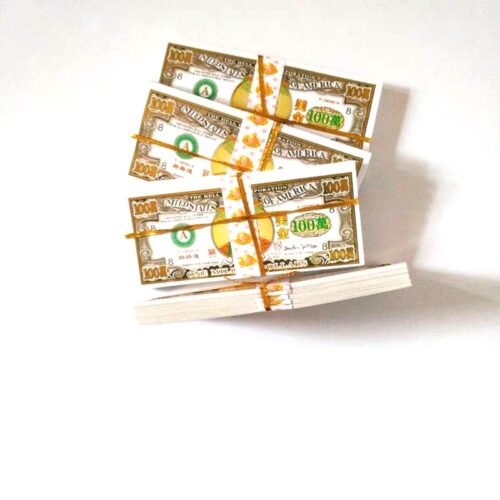
For a home altar the arithmetic is unromantic: bundles of 50, folded once, tucked under the name slip. If you would rather not hunt a Chinese stationer, we ship USD ancestor money in 100-bill packs, 80 gsm bamboo pulp with foil-stamped corner marks — silver-route paper, printed for the dead, whatever the currency design says. Where the paper goes after the fire is a different question; we keep that separate in where does ancestor money go.
Can you burn gold paper for the dead?
You can, but you are mailing the wrong office. Gold is the deity route: tian jin (Heaven gold) for the Jade Emperor’s tier, burned in the biggest sheets on the ninth day of the first lunar month, the year’s heaviest heaven-mail day; shou jin (longevity gold) with a red seal on the foil for ordinary deities; fu jin (fortune gold), small patch, for land gods and the corner shrines. Silver is the dead’s route, and the dead have held that route as long as anyone can print. The word for the underworld itself started as a depth, not a court — “yellow springs”:
《左传·隐公元年》 · Zuozhuan, first year of Duke Yin, c. 4th century BCE
不及黄泉,无相见也。
Until we reach the yellow springs, we shall not see each other again.
The yellow springs is groundwater — down, but a depth before it is a bureaucracy. Keep that in mind when someone tells you the whole paper trade exists “to pay hell’s officials.” The Treasury-filling ceremonies that run on gold paper — the three Offices of Heaven, Earth and Water, each with its own treasury — are requests filed by living people about their own accounts, not shipments to the dead. That single fact breaks the assumption that all burning is funerary, and it is the assumption the English-language internet is built on.
Because the label helped build that assumption: “hell money” is a 19th-century English observer’s translation, pressed onto a two-route system by people watching only the funerary half. We use the phrase in headings because that is what gets typed into search, and then correct it here, once, plainly: the fire carries, the address decides, and half the addresses are up.
The Taiwanese grades, by name
The trade sorts by grade and size, and the Taiwanese price lists are the most standardized we deal with. The grades we have actually handled:
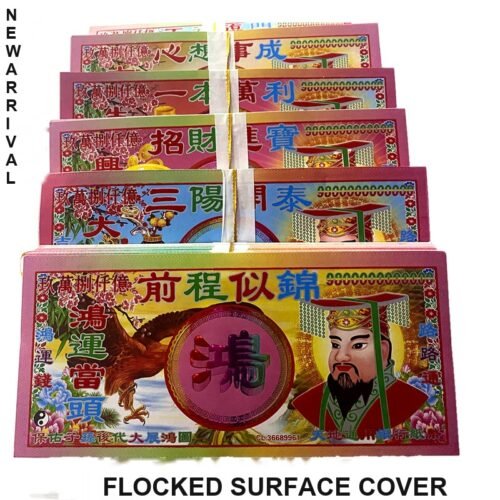
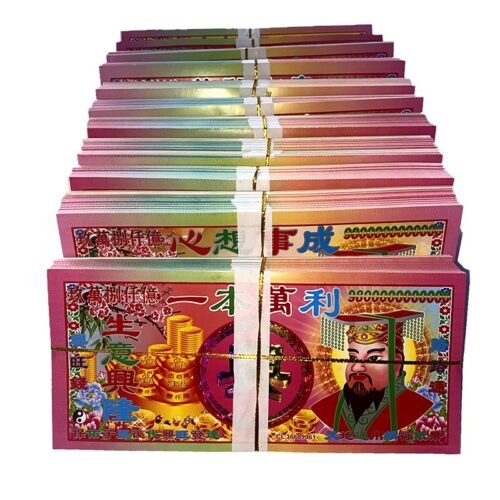
- Tian jin — Heaven gold, top of the line, the largest sheets we stock, full foil edge to edge, Jade Emperor’s tier only.
- Chi-san — named for the sheet size rather than the deity tier (the trade’s ruler, roughly 40 centimeters on the long edge). Used for the high heaven grades that need a bigger sheet.
- Shou jin — longevity gold, medium sheet, foil patch stamped red with the longevity character; the everyday deity sheet.
- Fu jin — fortune gold, small patch on small paper; land gods, corner shrines, small favors.
- Da yin — large silver, the ancestor sheet.
- Xiao yin — small silver, foil strip, for strays and base spirits.
Price lists also carry yi jin and a few regional variants whose names shift between wholesalers. We have bought chi-san and only heard of yi-jin from other shops’ catalogs, so we stop there rather than print a description we cannot stand behind. Sheet sizes move a centimeter or two between manufacturers anyway; the reliable signal is the ordering — heaven sheet biggest, deity sheets by patch size, silver sheets by patch width — not the centimeters.
How the foil behaves in the flame
This is the part no catalog prints, and it is how we sort incoming stock:
- Real tin foil, the traditional surface: dull grey-gold before the fire, then it pools in the ash as bright beads. Soft enough to dent with a fingernail. Heavier sheets, slower burn.
- Aluminium foil: brighter in the pack, a sharper crinkle when handled, and it burns out to fragile grey ash with no beads. Most modern mid-grade stock is this.
- Gold-printed plastic film, the cheap tier: black smoke, a chemical edge to the smell, and a curled black film left sitting in the ash. We pull this out of temple burns before the fire — the temple does not burn plastic film, whatever the wholesaler calls it.
- Printed gold ink, no foil: the cheapest, burns like ordinary paper, and looks wrong the moment light hits it. Fine for craft and classroom use, which is what most of it is bought for.
Check a pack before you buy: tilt it toward the light. Real foil reflects in one flat plane; plastic film glitters and slightly ripples. One-second test, no tools.
Common questions
What happens if I burn gold and silver together?
Nothing supernatural — it is a breach of etiquette, like mailing a letter to two addresses at once. Re-sort the pile and burn separately. The temple staff keep two baskets for exactly this reason; home burns can keep two sides of the same basin.
Is hell money gold or silver?
Usually silver-route. “Hell money” is the 19th-century English label for funerary paper generally, and most sheets sold under that name are the ancestor grade — silver tone, plain paper, no deity seal. The name flattens a two-route system into one direction; the paper itself does not.
Do the recently dead get gold paper too?
No, not by the rules we see enforced: the dead get silver, from the first burn through the anniversaries. Gold enters at the deity addresses — the City God, the three Offices — and those filings belong to living petitioners.
How much gold paper does a deity get?
Grade before quantity: the ninth day of the first lunar month takes the biggest heaven sheets, ordinary temple days take shou jin, and corner shrines take fu jin. Families disagree about counts and we decline to referee; the grade is the part the temple actually checks.
If you need a practice pack to learn the grades by hand, the 300-DPI printable ancestor money PDF lets you print and fold a few sheets tonight — paper route only, silver address, and it costs less than the foil you will graduate to.