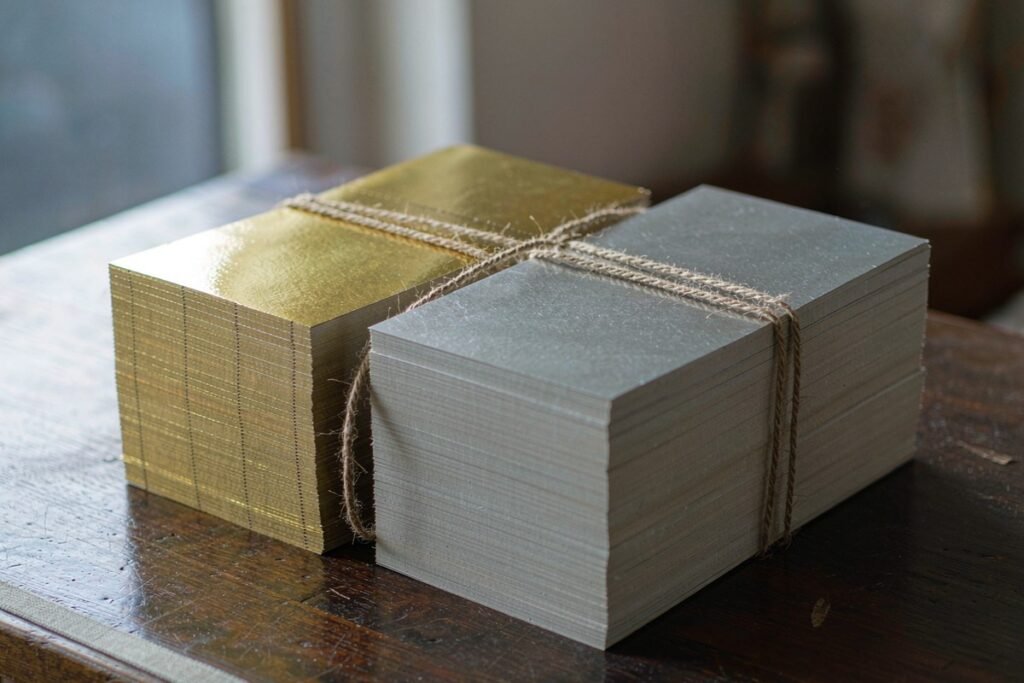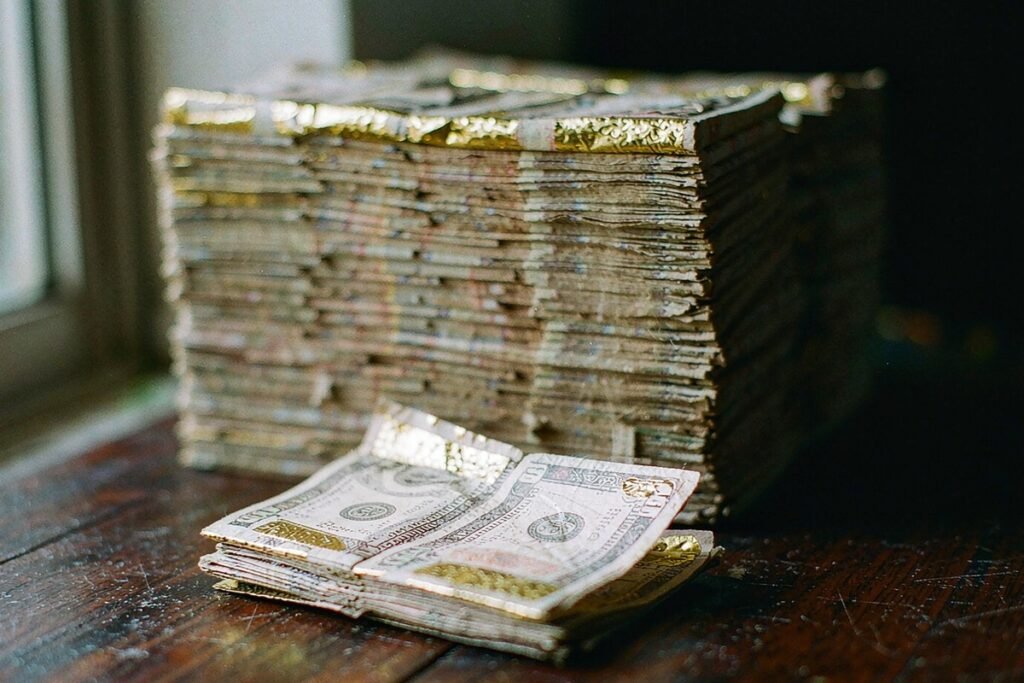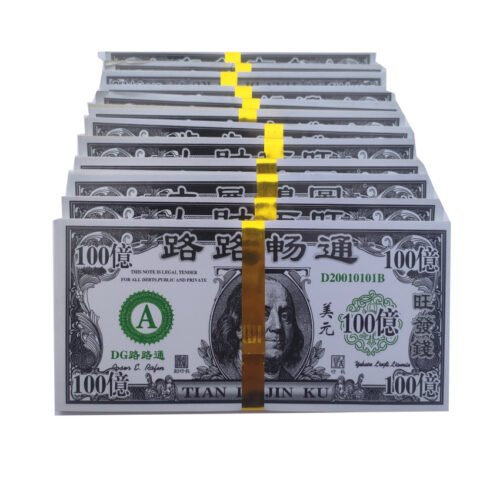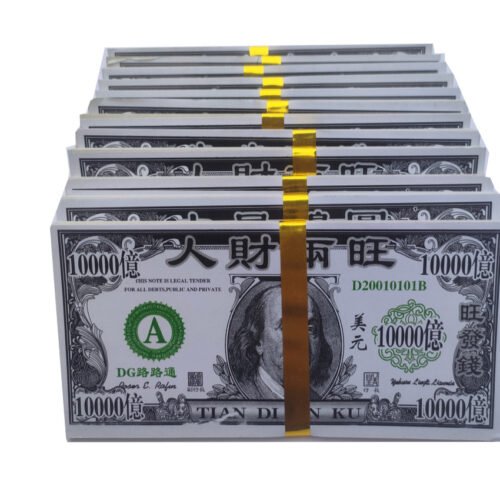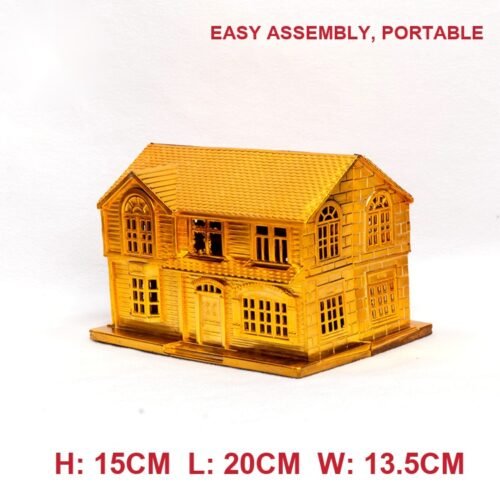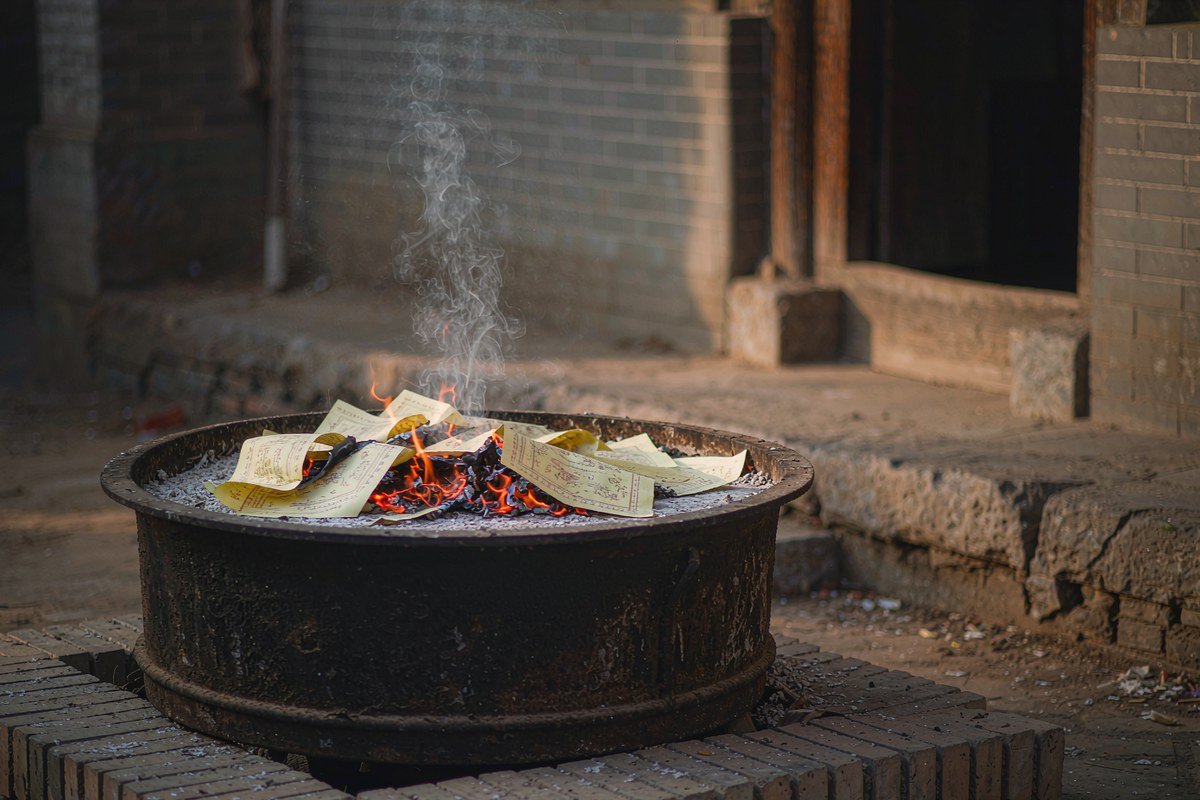
Where ancestor money goes is decided by the paper you pick and the name you write, not by the fire itself. Gold-foil sheets are addressed upward, to gods and to the celestial treasuries that keep them supplied. Plain silver sheets are addressed downward, to ancestors and to the unnamed dead. The fire is the courier. The address is printed on the paper.
Where does the money go after you burn it?
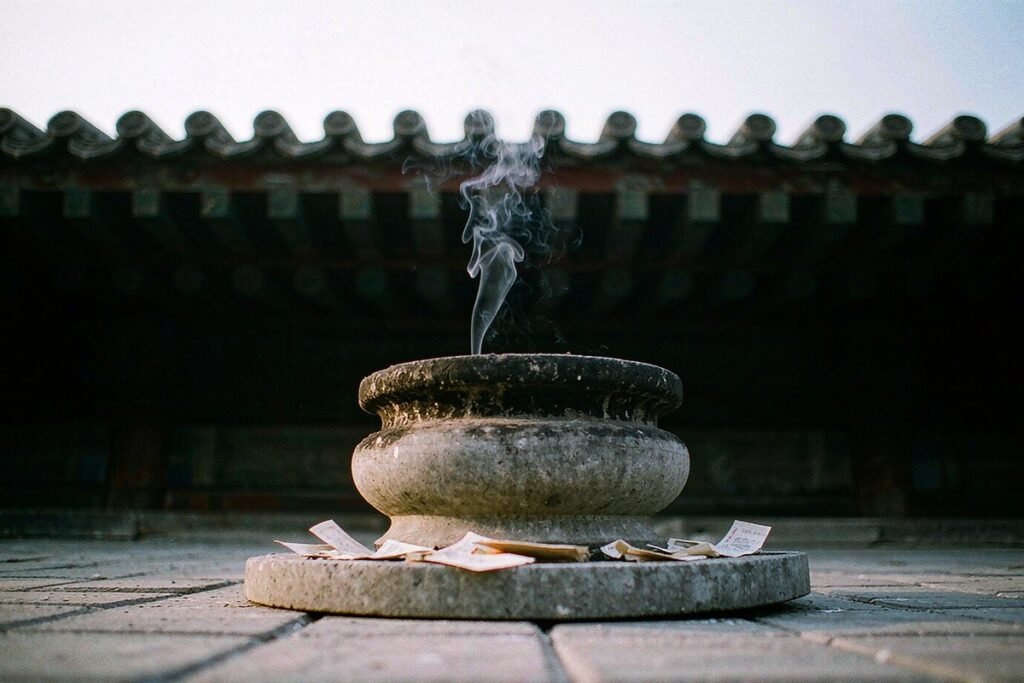
Nobody standing at a basin thinks the bill flies anywhere in one piece. What travels, in the working theory most families carry without ever stating it, is the value — released by the burning, delivered by whatever handles such things. The paper is a token, the fire is the post office, and like any postal system this one fails completely if you forget the address.
That is why the question has two answers, and the practical one matters more tomorrow morning when you are actually holding a match. The ritual answer involves treasuries and officials, which we get to below. The practical answer is shorter: it goes where the paper was made to go, and the paper is made differently on purpose.
Here’s the thing people miss when they buy a generic pack online: gold paper and silver paper are not two colors of the same product. They are two mail classes. Mixing them in one pile is a manners error, not a catastrophe — we have watched families do it, wince, and correct it — but the correction is always the same: separate the piles, gold to the gods, silver to the ancestors, and if there is a third pile for the wandering dead, keep it downwind and apart. The bundles are tied with hemp rope soaked in wax, and that rope catches before the paper does, with a soft white puff of smoke. That puff is your cue that the fire has taken and you can start feeding sheets.
Does ancestor money go to heaven or hell?
Both roads exist, and both are older than paper money by more than a thousand years. The sacrifice that rises and the offering that goes down were never in competition:
《礼记·祭法》 · Liji, “Ji Fa” (Treatise on Sacrifice), compiled c. 1st century BCE
燔柴于泰坛,祭天也。瘗埋于泰折,祭地也。
Pile wood on the great altar and burn it: that is the sacrifice to Heaven. Bury the offering at the great mound: that is the sacrifice to Earth.
Read that as a map, not as poetry. From the beginning, sacrifice had two directions: burning went up, burial went down. Paper money inherits both. The gold foil sheets addressed to the Jade Emperor or the Three Officials are descendants of the burnt offering; the silver sheets laid out for the dead are descendants of the buried one. So when someone tells you joss paper is “for hell,” they have flattened a two-way system into one direction. (The English label itself is a translation artifact from nineteenth-century observers — that naming problem deserves its own article, so we will not retell it here.) What matters for your table is the practical split, which we cover in detail in our piece on whether you can burn paper money to heaven: top-grade gold paper goes to the Jade Emperor alone, and the upward route has its own paperwork. The downward road is quieter — silver paper for ancestors, and the old word for the destination was the Yellow Springs, which named groundwater, a depth, not a courtroom.
The three treasuries, and who they are for
Temple practice recognizes three treasuries, one for each of the Three Officials. We log these deposits at the temple counter the way a bank logs a wire, and the paper differs by destination:
| Treasury | Official | What it holds | Paper used |
|---|---|---|---|
| Tianku, the heavenly treasury | Heaven Official, tian guan | Merit and fortune, petitioned upward | Sky money, top-grade gold foil |
| Diku, the earthly treasury | Earth Official, di guan | Settling what is owed, pardons | Middle-grade gold, earth-office sheets |
| Shuiku, the water treasury | Water Official, shui guan | Easing what is blocked or stuck | Water-office sheets, often boat-shaped |
One thing to keep straight, because sellers blur it constantly: the treasuries are not accounts for the dead. The fill-the-treasury rite is petitioned by the living, for the living household. A grandmother’s estate does not draw on the heavenly treasury. This is the clearest proof that paper offerings were never only funeral goods — half the system runs on requests from people who are still breathing. If your question is really about stocking the dead rather than petitioning the living, the overview in what ancestor money is actually for covers that distinction.
Which sheet goes where
The routing rules are short enough to memorize:
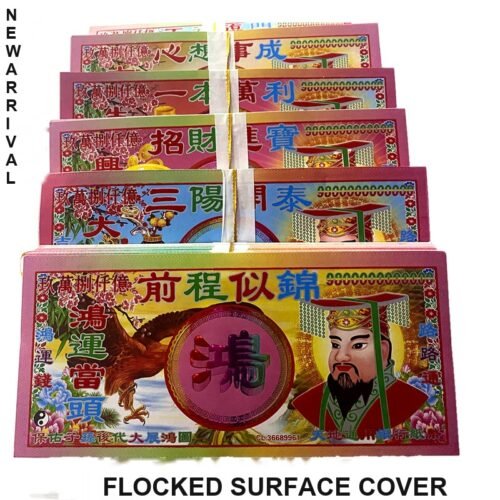
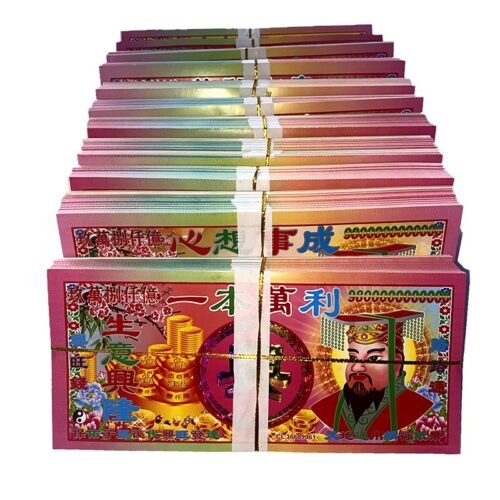
- Gold foil, anything laminated or stamped: gods, officials, treasuries. Upward. Never to a named ancestor.
- Plain silver, matte, no foil: ancestors and the family dead. Downward.
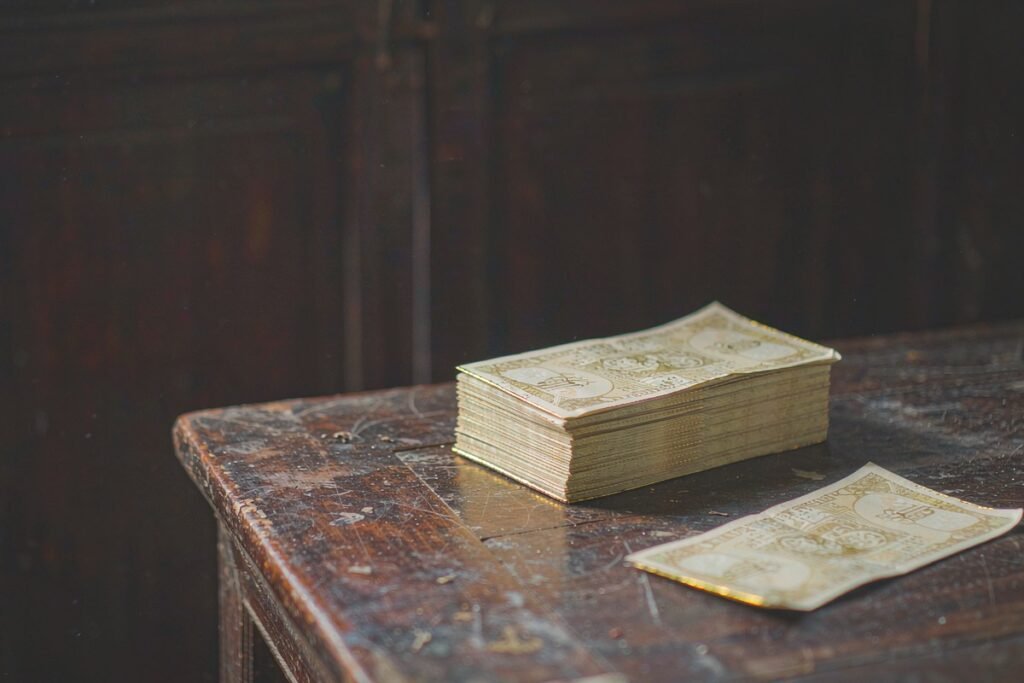
- Small plain bills or clothes-paper in a third pile: the unnamed dead, the ones with nobody left. Some counties burn this pile first, others after the family pile; we have seen both, roughly half and half in the two counties we work, and nobody we asked treats the difference as doctrine.
- Petition slip, brushed with the name: goes on top of whichever pile it directs. It is the address label, so it burns last, on top.
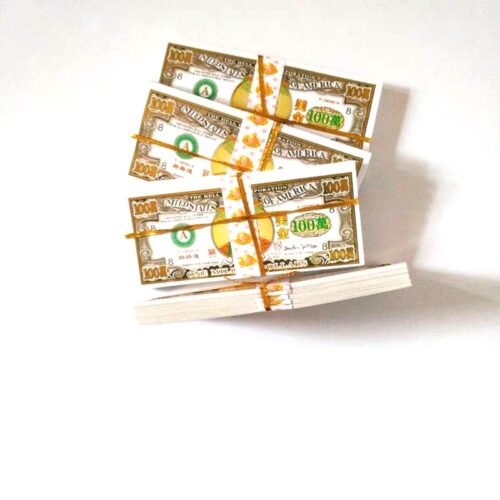
If you would rather not hunt down a supplier, we sell USD ancestor money in 100-bill packs, printed on 80 gsm bamboo pulp with foil on one side — the foil side blisters and pales before the sheet itself catches, which is how you can tell it apart from plain silver once the fire is going. Remove the desiccant packet from the shipping box before anything goes near a flame; it smells like burning plastic and ruins the first minute of an otherwise clean burn.
Do ancestors actually receive the money?
Honest answer: we do not know, and neither does anyone else, including the sellers who imply otherwise. What we can tell you is that the doubt is not modern. A Tang poet stood at the graves during the Cold Food festival and asked the same question out loud:
《寒食行》 · Wang Jian, “Han Shi Xing”, Tang dynasty
三日无火烧纸钱,纸钱那得到黄泉。
Three days with no fire, so no paper is burned — and how would paper money ever reach the Yellow Springs?
Thirteen centuries ago the poet’s worry was the opposite of ours: his town had rules against lighting fires on those days, so the paper could not even be burned, let alone delivered. Our version of the same worry is a damp March wind that keeps smothering the pile. Both worries miss the point the Confucians had already made — the rite is addressed “as if” the ancestor is present, and the doing is the obligation, not the delivery confirmation. What we actually watch for at a burn is more mundane: did it burn clean, sheet by sheet, instead of smouldering in a lump that leaves half the stack unburnt in the middle? Feed it one sheet at a time. It takes four minutes. You have four minutes.
What the petition actually directs
The written slip is what turns a pile of paper into a delivery. At the temple we brush the name in ink that is deliberately thick — thin ink dries gray, and under firelight it reads as nothing. The name goes centered, the date beside it, the request below in as few words as will hold the meaning. Then a clerk reads the name aloud before the pile goes into the basin, because the reading is the addressing.
The stranger pile never gets a name, and that is deliberate. It is burned at the edge of the yard, downwind, so the smoke of the unnamed dead does not cross over the smoke of your own. Families who cannot get to a grave or a temple send the name and the wish to us instead — a temple deposit with the name and the wish read aloud — and the burn comes back on video, address and all.
Common questions
Is it wrong to burn gold paper for my grandmother?
It is a manners error, not a disaster. Gold is addressed to gods and officials. For ancestors, use plain silver, and if you already mixed the piles, separate them and burn the gold separately for the gods first.
What is the difference between tianku and diku?
Tianku, the heavenly treasury, receives merit petitioned upward for fortune. Diku, the earthly treasury, is where debts and pardons are logged. Different officials, different paper, different request wording.
Does the ash left in the basin mean anything?
We treat it as evidence of the burn, not of the delivery. A clean white layer with no unburnt sheets means the fire was fed properly. We do not read fortunes in it and would not trust anyone who does.
Can one burn serve both directions at once?
Keep the piles separate, even in the same basin: gold first for the gods, then silver for the ancestors, then the stranger pile if you make one. Same fire, three mailings.
Frequently asked questions
Where does burned ancestor money go?
It is decided by the paper you pick and the name you write, not by the fire itself. Gold-foil sheets are addressed upward to gods and celestial treasuries; plain silver sheets go downward to ancestors and the unnamed dead.
Why is gold paper burned for gods and silver for ancestors?
Gold carries the higher address: gods and the heavenly treasuries that keep them supplied. Silver is the ordinary mail of the underworld, for ancestors and for those with no one left to remember them.
Does the fire decide where the money goes?
No. The fire is only the courier. The address is printed on the paper and completed by the name you write.